Phoenix Drone Pros
Blog
Learning to fly a drone is about more than just getting it off the ground—it's about building confidence, flying safely, and capturing incredible perspectives. With more than 10 years of professional drone experience, thousands of commercial flights, and over 100 students trained, Robert Biggs of Phoenix Drone Pros provides personalized one-on-one drone flight training in Phoenix that helps beginners and aspiring professionals become skilled, confident pilots.
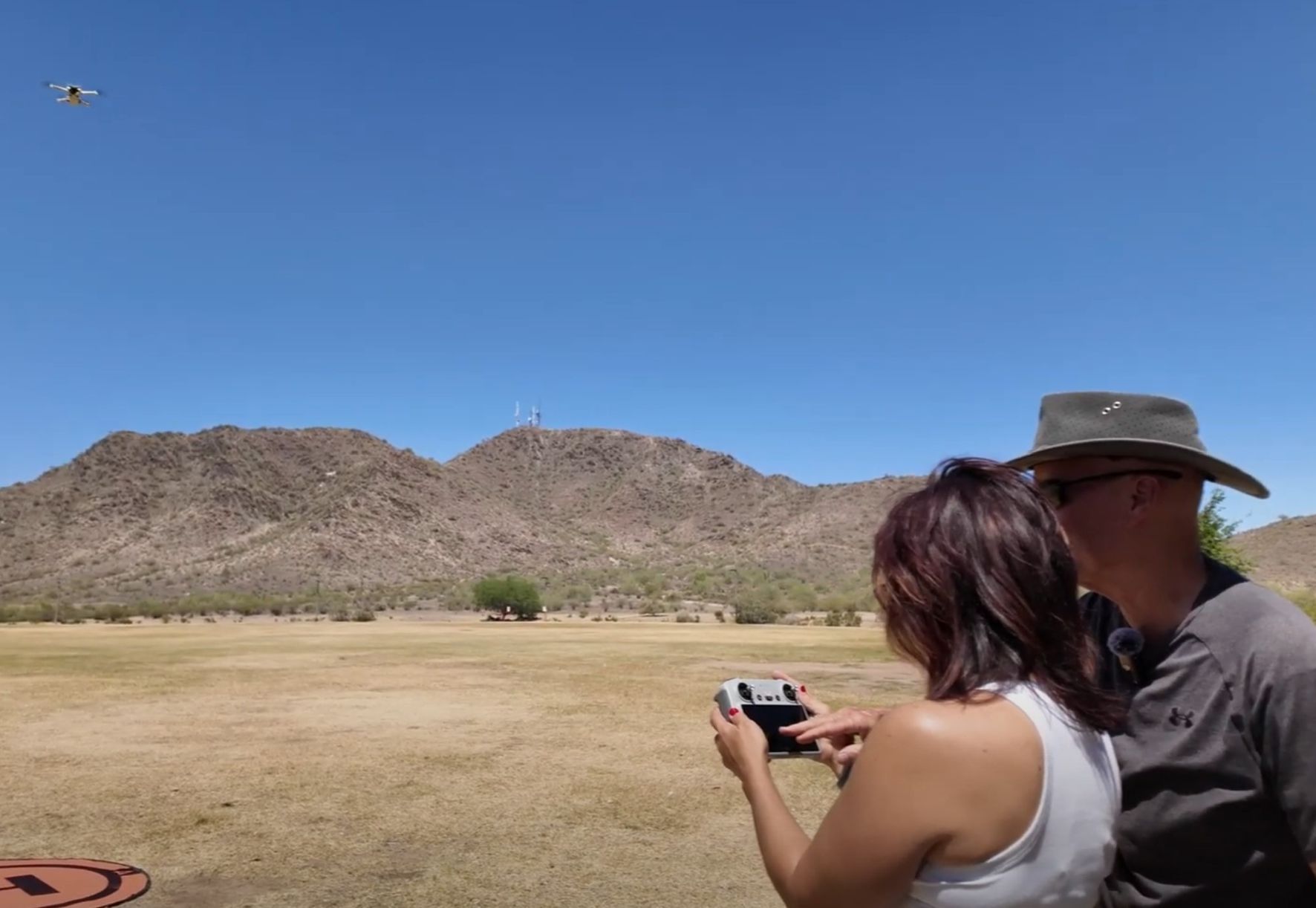
Hands-On Drone Flight Training From a Working Commercial Pilot With Over 10 Years of Experience, Thousands of Professional Flights, and More Than 100 Students Trained
"There is a moment that every drone pilot remembers forever—the moment they see the world from above for the very first time."
I remember mine like it was yesterday.
It wasn't with a brand-new drone that unfolded from a backpack or one that automatically took off with the push of a button.
It was a DJI Flame Wheel F450.
Back then, drones weren't sold as complete systems. I bought the frame from a local hobby shop, then spent weeks ordering motors, electronics, flight controllers, and other components from suppliers around the world. Once everything finally arrived, I hired the hobby shop to assemble it, program it, and configure the controller.
There were no intelligent flight modes.
No obstacle avoidance.
No stabilized camera gimbal.
No live video feed.
Instead, I strapped a GoPro to the bottom of the drone and programmed it to take a photograph every ten seconds while I flew.
Looking back, it sounds primitive.
At the time, it felt like magic.
I was working as the account manager responsible for the landscaping of the entire Val Vista Lakes master-planned community in Gilbert, Arizona. My goal was simple: I wanted a better way to show the HOA board the quality of our work.
So I launched the drone.
When I got home and downloaded those images, I couldn't believe what I was seeing.
The lakes.
The landscaping.
The walking paths.
The neighborhoods.
Everything looked completely different from the air.
That day changed my life.
I didn't just fall in love with drones.
I fell in love with the new perspective they gave me.
More than ten years later, after thousands of commercial flights, that feeling hasn't changed.
It's the same excitement I hope every student experiences during their very first lesson.
Welcome to Robert's Flight School
If you're reading this, there's a good chance you're in one of these situations:
- You just bought your first drone and aren't sure where to start.
- You're afraid of crashing an expensive drone.
- You want to earn your FAA Part 107 certificate.
- You dream of starting your own drone business.
- You've watched countless YouTube videos but still don't feel confident flying.
If that's you...
You're exactly the kind of student I enjoy working with.
My name is Robert Biggs, founder of Phoenix Drone Pros.
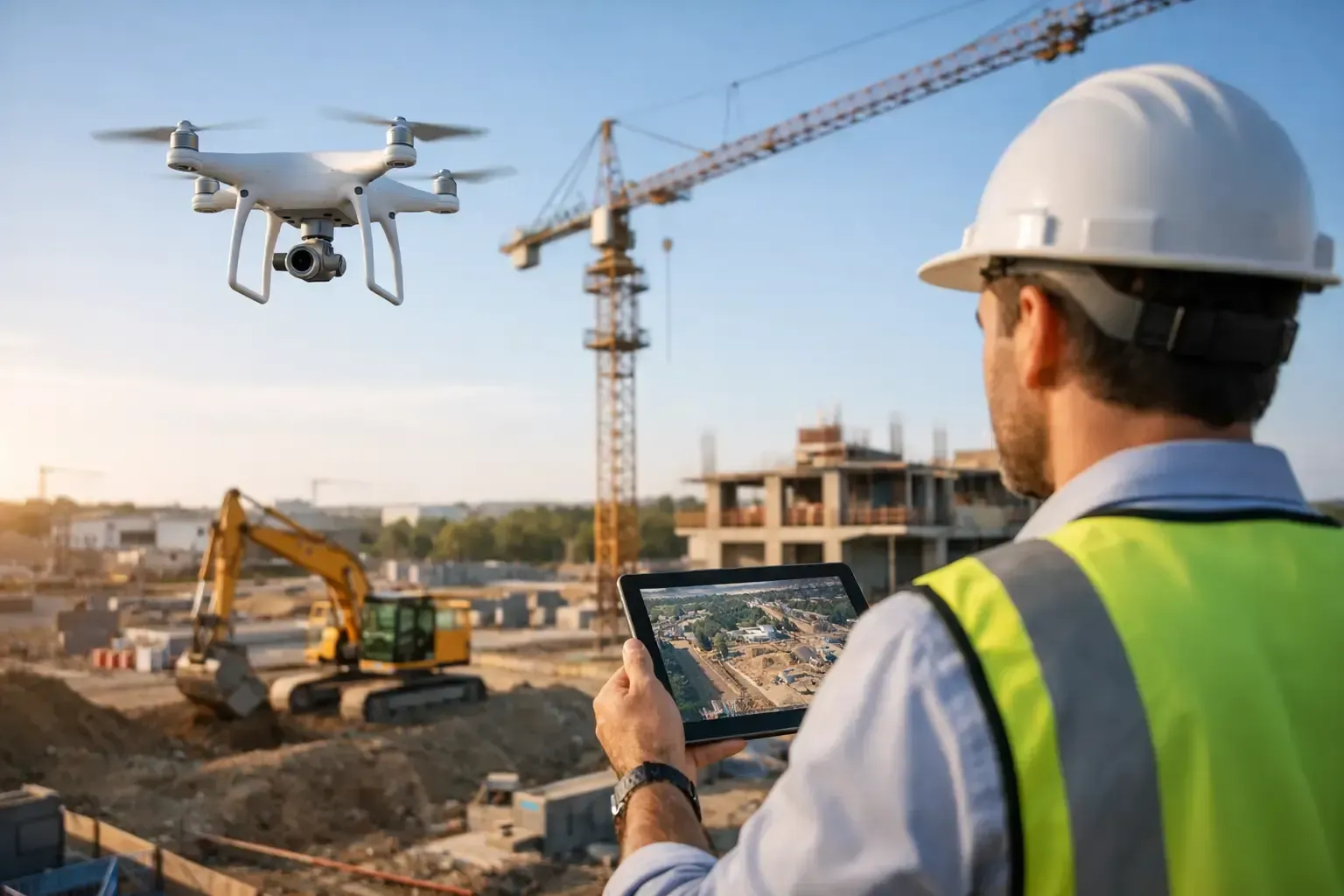
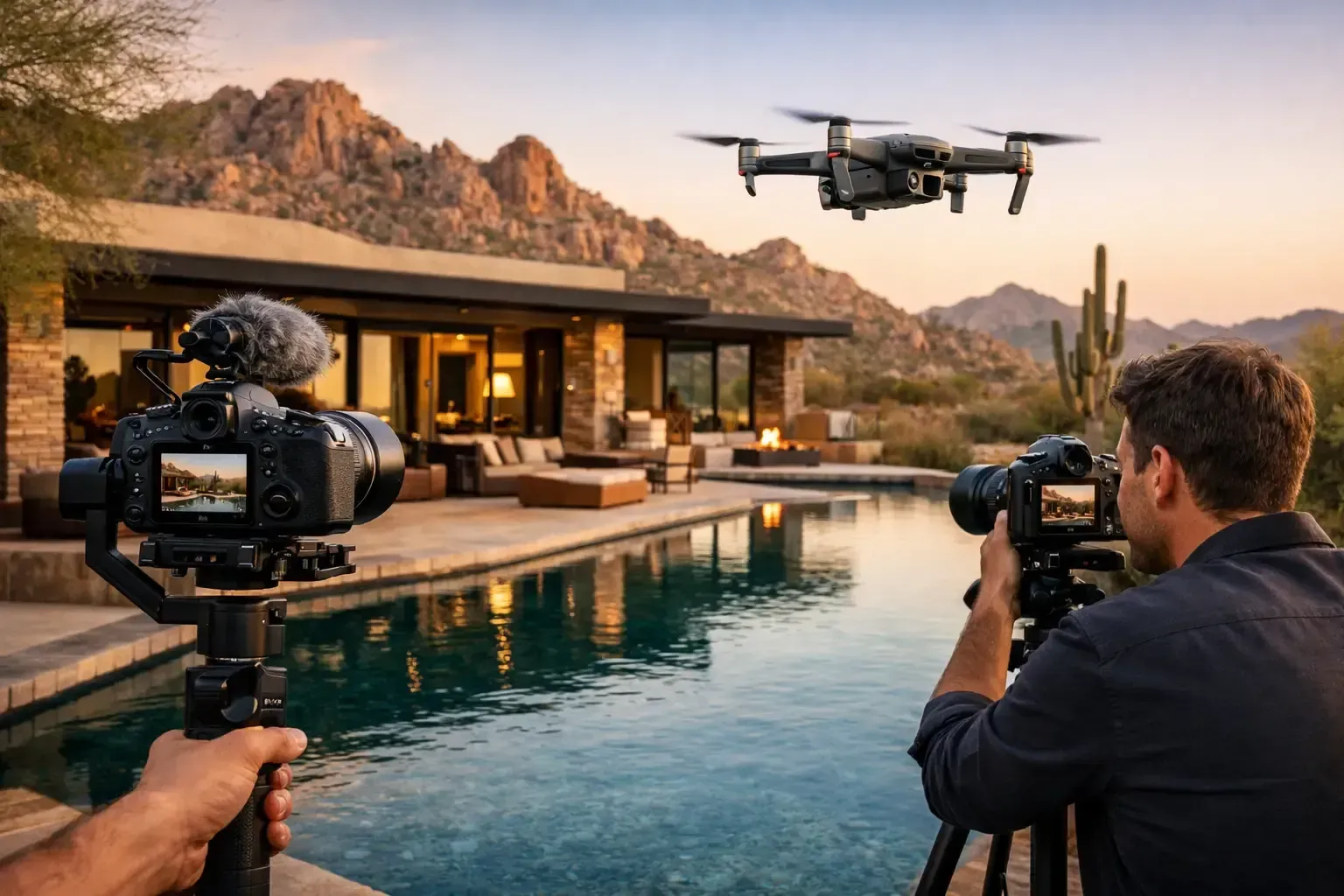
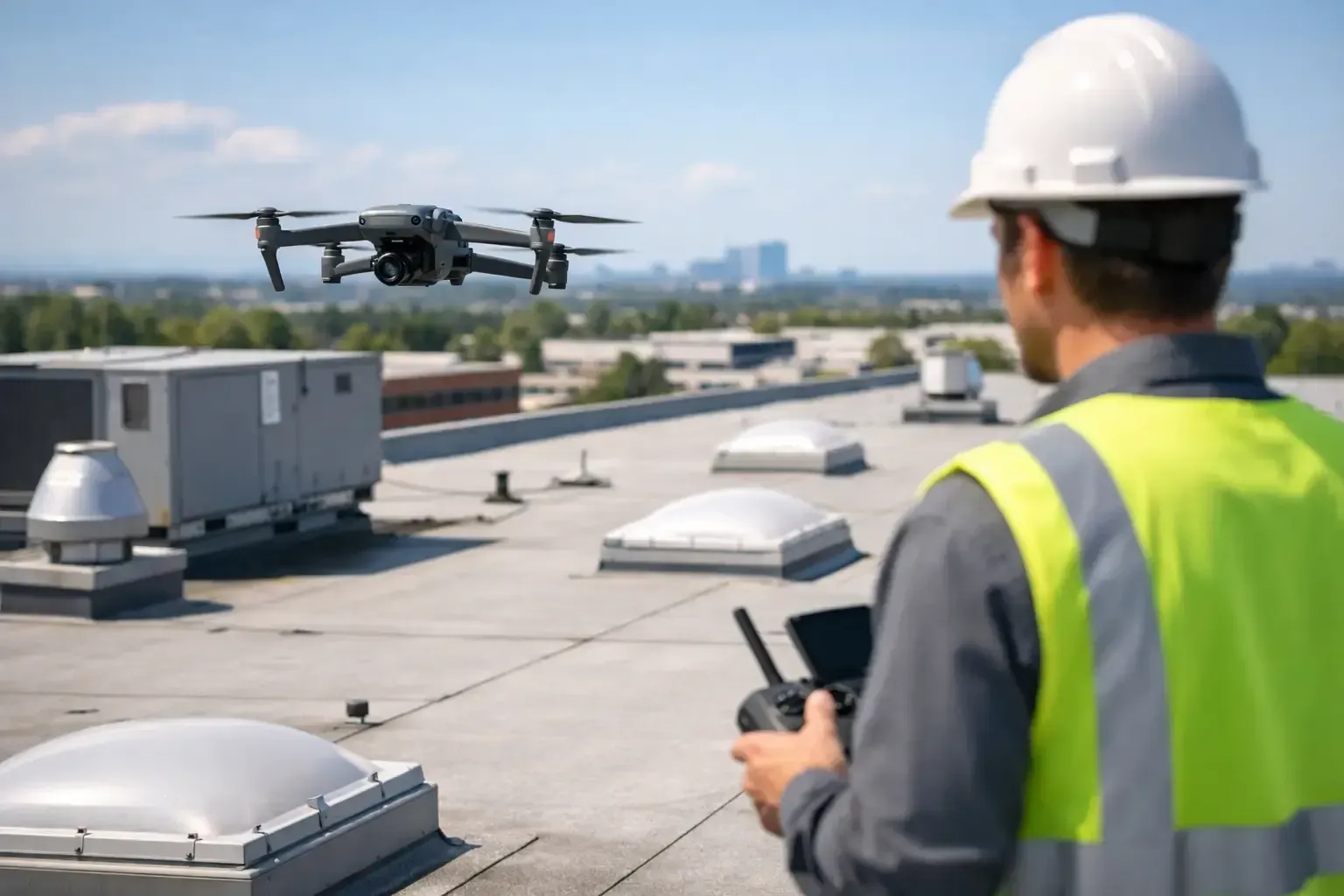
For more than a decade, I've been flying drones professionally throughout Arizona. I've completed thousands of commercial drone flights for real estate, construction, mapping, inspections, FPV productions, events, commercial marketing, and specialty aerial projects.
Along the way, I've also trained more than 100 students, from complete beginners to future commercial drone pilots.
One thing has become very clear.
Watching videos online is helpful.
Actually flying with an experienced instructor is transformational.
Why I Started Teaching Drone Flight
People often ask me how I became a drone instructor.
Ironically, I didn't start by planning to teach.
I was hired by Drone Brothers to train new drone pilots using their flight training program.
As I worked with student after student, I noticed something unexpected.
I genuinely loved teaching.
There is something incredibly rewarding about watching someone who has never touched a drone controller before become comfortable enough to confidently take off, maneuver through the sky, and land safely.
You can literally see confidence replacing fear.
That moment never gets old.
Eventually, I realized I could build my own training program here in Arizona.
Instead of teaching for someone else's company, I could create a personalized, one-on-one experience that focused entirely on the student's goals.
Today, every lesson is customized around the individual sitting next to me.
Whether your goal is recreational flying, professional photography, FAA certification, or building a drone business, we'll train at your pace.
Because every student is different.
🚁 Robert's Pro Tip #1
Learn From Someone Who Still Flies for Clients
One of the biggest advantages of one-on-one instruction is learning from someone who is still actively working in the industry.
Everything I teach comes from real commercial flights—not just textbooks or online videos.
Every week I'm solving real problems, flying real missions, and adapting to real-world conditions.
Those experiences become your lessons.
Why One-on-One Training Beats Online Courses
Don't get me wrong.
Online courses have their place.
I've watched many of them myself.
They do a great job explaining drone terminology, FAA regulations, and basic concepts.
But here's what they can't do.
They can't stand beside you when you're nervous about your first takeoff.
They can't correct your grip on the controller.
They can't explain why your drone isn't behaving the way you expected.
They can't stop you before you make a mistake.
And they certainly can't help you build confidence.
That's where personalized instruction changes everything.
When we're training together, I can immediately see what you're doing well and where you need improvement.
Sometimes it's something as simple as relaxing your hands.
Sometimes it's your body position.
Sometimes it's the way you're looking at the controller instead of the aircraft.
Small corrections made early prevent bad habits that could take years to break.
My Goal Isn't Just to Teach You to Fly
Most instructors teach students how to operate a drone.
That's important.
But it isn't my primary goal.
My goal is much bigger.
I want you to love flying drones.
I want you to confidently pull your drone out in front of your family, your friends, or even a paying client and know exactly what to do.
No hesitation.
No anxiety.
No wondering which button to push.
Just confidence.
Because confidence changes everything.
When you're no longer worried about crashing...
You start enjoying the experience.
You begin seeing creative camera angles.
You start thinking like a photographer instead of just a drone operator.
And before long, you realize you're capturing moments and perspectives that most people will never experience.
That's the kind of pilot I'm trying to create.
🚁 Robert's Pro Tip #2
Confidence Doesn't Come From Watching Videos
Confidence comes from time on the sticks.
Every successful flight teaches you something.
Every smooth landing builds confidence.
Every lesson makes the next flight easier.
There's no shortcut.
The best pilots become the best because they fly.
What Your First Drone Flight Lesson Looks Like
One of the questions I hear most often is:
"What happens during my first lesson?"
The answer surprises most people.
We don't just show up, hand you a controller, and tell you to start flying.
We begin at an FAA-Recognized Identification Area (FRIA) in East Mesa, where students can learn in a safe environment while following FAA regulations.
Before the drone ever leaves the ground, we talk about safety.
We'll discuss FAA rules, responsible flying, and the habits that professional pilots use every day.
I believe great pilots are created before the motors ever start spinning.
Next, we'll become familiar with your equipment.
We'll go through:
- Your drone
- Batteries and charging
- Flight controller
- Camera settings
- Return-to-Home
- Intelligent flight modes
- DJI Fly app functions
- Pre-flight inspections
Many new drone owners tell me they're overwhelmed by all the buttons and menus.
By the end of this session, those buttons will make sense.
Only after you're comfortable with the equipment do we begin flying.
One of the first exercises I teach is something I call "Squares in the Sky."
It sounds simple.
That's because it is.
But it's also one of the best ways to develop smooth stick control, orientation, and confidence.
Everything we do after that builds on those foundational skills.
🚁 Robert's Pro Tip #3
Slow Is Smooth. Smooth Is Professional.
The biggest mistake I see beginners make is trying to fly aggressively.
Professional pilots don't force the drone around the sky.
They guide it.
Smooth stick movements create smooth footage.
Relaxed hands create confident pilots.
Slow down.
Your drone—and your videos—will thank you.
Part 2: Building Confidence, Avoiding Mistakes, and Learning Like a Professional
The Three Biggest Mistakes Every New Drone Pilot Makes
After training more than 100 students, I've noticed something interesting.
Almost everyone makes the same mistakes.
The good news?
They're all easy to correct—once someone points them out.
One of the biggest advantages of one-on-one instruction is that I can identify these habits within the first few minutes of watching you fly. Instead of spending months developing bad habits, we fix them immediately.
Mistake #1: Flying Too Aggressively
Without question, this is the mistake I see most often.
New pilots tend to push the control sticks too far and too fast. They're excited, nervous, and trying to make the drone respond immediately.
The result?
Jerky movements.
Abrupt stops.
Uneven camera motion.
Footage that looks amateur.
Professional pilots fly differently.
Watch an experienced pilot and you'll notice something.
Their hands barely move.
Small, deliberate stick movements create smooth, cinematic flight.
One of the first things I teach every student is how to relax.
Relax your shoulders.
Relax your grip.
Relax your hands.
Once students stop trying to force the drone around the sky, everything changes.
Their flying immediately becomes smoother.
Their confidence grows.
Their footage improves dramatically.
🚁 Robert's Pro Tip #4
Your Hands Tell Me Everything
Within about thirty seconds of watching someone fly, I can usually tell their experience level.
Experienced pilots have relaxed hands.
New pilots have tense hands.
If your hands are tense, your drone will be tense.
Take a deep breath before every flight.
Relax your grip.
You'll be amazed how much smoother you become.
Mistake #2: Letting the Control Sticks Snap Back
This is something I hear long before I see it.
Click... click... click...
That sound is the controller sticks snapping back to center.
Almost every beginner does it.
While it might seem insignificant, it's actually telling me something important.
It tells me the pilot is reacting instead of controlling.
Professional pilots don't simply let go of the sticks.
They guide them back to center.
It's smoother.
It's quieter.
And most importantly...
It creates much smoother flight.
It may sound like a tiny detail.
It isn't.
Professional flying is the result of hundreds of little details done correctly.
Mistake #3: Flying With Thumbs Only
This surprises many students.
Almost everyone starts by flying with only their thumbs.
It works.
But it isn't the most precise way to control a drone.
One of the first techniques I teach is pinching the control sticks using both your thumb and index finger.
That single adjustment gives you much finer control over every movement.
It helps you make smoother turns.
Better camera movements.
More precise positioning.
And ultimately...
More professional-looking footage.
It's one of those little techniques that separates someone who simply owns a drone from someone who truly knows how to fly one.
Something You Probably Won't Learn on YouTube
There are thousands of excellent drone videos online.
I've watched many of them.
But there's one thing I almost never see anyone teach.
How to properly hold the controller.
It seems like such a small thing.
Until you realize you'll hold that controller for hundreds of hours over the life of your drone.
Your grip matters.
When I teach students, I don't simply hand them the controller.
I teach them how to become one with it.
Here's how I recommend holding it:
- Pinch each control stick using your thumb and index finger.
- Rest your middle fingers naturally on the shutter button and the pan/zoom wheels.
- Position your ring fingers near the customizable C1 and C2 buttons.
- Keep your grip relaxed while maintaining complete control.
This allows you to operate nearly every important function without constantly repositioning your hands.
It becomes natural.
Efficient.
Professional.
These are the kinds of details that rarely get covered online because they're difficult to explain in a video.
They're much easier to teach in person.
🚁 Robert's Pro Tip #5
Your Controller Should Feel Like an Extension of Your Hands
When you stop thinking about where your fingers belong...
When every button becomes second nature...
When every camera movement happens instinctively...
That's when you're no longer just flying a drone.
You're creating.
The Two Biggest Fears Every Student Has
After speaking with hundreds of prospective students, I hear the same two concerns almost every week.
They're completely understandable.
And they're exactly why one-on-one training exists.
"I'm Afraid I'll Crash My Drone."
Most people have just invested hundreds—or even thousands—of dollars into their new drone.
The last thing they want is to destroy it on their first flight.
I understand that feeling.
That's why I don't rush students into the air.
We build confidence one step at a time.
You learn the equipment.
You understand the controls.
You practice simple exercises.
You develop smooth movements.
Confidence comes from preparation—not luck.
By the end of your first lesson, most students are amazed at how comfortable they feel.
"I Want to Fly my drone Legally."
The second concern I hear all the time is:
"I don't want to accidentally break FAA rules."
That's actually a great concern to have.
It means you're thinking like a responsible pilot.
Before every lesson, we discuss FAA regulations, airspace awareness, Remote ID requirements, and the responsibilities that come with flying a drone.
We'll also cover when you need a Part 107 certificate and how to determine where you can legally fly.
I explain the rules in plain English.
No confusing legal language.
Just practical guidance you can actually use.
🚁 Robert's Pro Tip #6
Respect the FAA Rules
Some people see FAA regulations as restrictions.
I see them differently.
The rules protect our ability to fly.
Every responsible drone pilot represents the entire drone community.
When you fly professionally, safely, and respectfully...
You help create more opportunities for all of us.
Kevin's Story
One student I'll never forget is Kevin.
Kevin is a military veteran who enrolled in one of my one-on-one training sessions.
Like many new students, he wanted to become a better pilot.
From the very beginning, I noticed something different about him.
He asked great questions.
He listened carefully.
He practiced every maneuver.
Most importantly...
He was willing to put in the work.
After completing his first lesson, Kevin enjoyed the experience so much that he immediately scheduled a second training session focused on drone mapping.
As we continued working together, it became obvious that he had something special.
His discipline.
His professionalism.
His work ethic.
Everything about the way he approached training impressed me.
Eventually...
I hired him to work for Phoenix Drone Pros.
That's one of the most rewarding parts of teaching.
Sometimes you're not simply helping someone learn a new hobby.
Sometimes you're helping them discover a new career.
Watching students grow into confident pilots—and sometimes trusted coworkers—is incredibly rewarding.
🚁 Robert's Pro Tip #7
Never Stop Being a Student
The best drone pilots I've ever met all have one thing in common.
They're still learning.
Technology changes.
FAA regulations evolve.
New drones arrive.
Better camera techniques emerge.
The moment you think you've learned everything...
You've stopped growing.
Even after more than ten years of professional flying, I'm still learning something new.
And that's one of the reasons I still love this industry.
Confidence Changes Everything
People often ask me what my favorite part of teaching is.
It's not the drone.
It's not the technology.
It's watching someone transform.
Students usually arrive nervous.
They're worried about crashing.
They're worried about making mistakes.
They're worried about looking inexperienced.
Then something happens.
They complete their first successful takeoff.
Their first smooth orbit.
Their first perfect landing.
You can literally see their confidence grow.
That's the moment I love.
Because I know what comes next.
Once the fear disappears...
The fun begins.
Part 3: Lessons Learned From Thousands of Commercial Drone Flights
Commercial Drone Flying Is Different
Flying a drone for fun and flying one professionally are two completely different experiences.
When you're flying recreationally, you're free to explore, experiment, and simply enjoy the view.
When you're flying for a client...
Everything changes.
There's a schedule.
There are expectations.
There are safety considerations.
Sometimes there's only one opportunity to get the shot.
Over the past decade, I've flown thousands of commercial missions throughout Arizona. Every one of them has taught me something.
Some lessons came from success.
Others came from mistakes.
Both have made me a better pilot—and a better instructor.
When students train with me, they aren't just learning how to fly a drone.
They're learning lessons that took me years to discover.
🚁 Robert's Pro Tip #8
Every Flight Has a Purpose
One habit separates professionals from beginners.
Professionals don't simply launch the drone and decide what to do once they're in the air.
Before I ever start the motors, I already know:
- What story I'm trying to tell.
- What shots I need.
- Where I'll take off.
- Where I'll land.
- What obstacles exist.
- What could change during the flight.
- What my backup plan is.
A great flight starts long before takeoff.
The Drone Flight That Changed How I Prepare
One of the most memorable assignments of my career took place deep underground...
Inside the Grand Canyon Caverns.
If you've never been there, imagine flying inside one of the largest dry caverns in the United States.
It's an incredible environment.
It's also incredibly unforgiving.
Unlike an outdoor flight where you can simply circle back and try again, I knew this mission would give me exactly one opportunity.
As soon as the drone lifted off, the propellers began stirring years of dust from the cavern floor.
Within seconds...
Visibility started disappearing.
Every camera move had to be intentional.
Every flight path had to be planned.
Every second counted.
There would not be a second attempt.
When the flight was over, the cave was filled with suspended dust.
The opportunity was gone.
That mission reinforced something I teach every student.
Preparation isn't optional.
Preparation is what allows you to succeed when there are no second chances.
🚁 Robert's Pro Tip #9
Sometimes You Only Get One Shot
Commercial clients don't pay you to "figure it out."
They hire you because they trust you to get it right.
Before every flight, ask yourself:
"If I only get one opportunity... am I ready?"
That question alone will make you a better pilot.
The Most Expensive Drone Crash of My Career
People sometimes ask me if I've ever crashed a drone.
The answer is yes.
And it's one of the best lessons I've ever learned.
I was flying a DJI Mavic 3 Pro on a traffic survey in downtown Phoenix.
The assignment required me to hover over an intersection while keeping the aircraft positioned just off-center so I wasn't flying over people or moving vehicles.
It was a mission I had successfully completed many times before.
I found what looked like the perfect launch location.
From that parking spot, I had excellent visibility of the drone and could maintain visual line of sight throughout the operation.
Everything looked perfect.
I launched.
Climbed to approximately 300 feet above ground level.
Positioned the drone precisely over my target.
Pointed the camera straight down.
Everything was exactly where it needed to be.
I glanced down at the controller for just a moment to verify my camera settings.
Then...
Something happened.
The drone was falling.
The final image recorded by the camera was a photograph of the sky.
By the time I looked back up, it was too late.
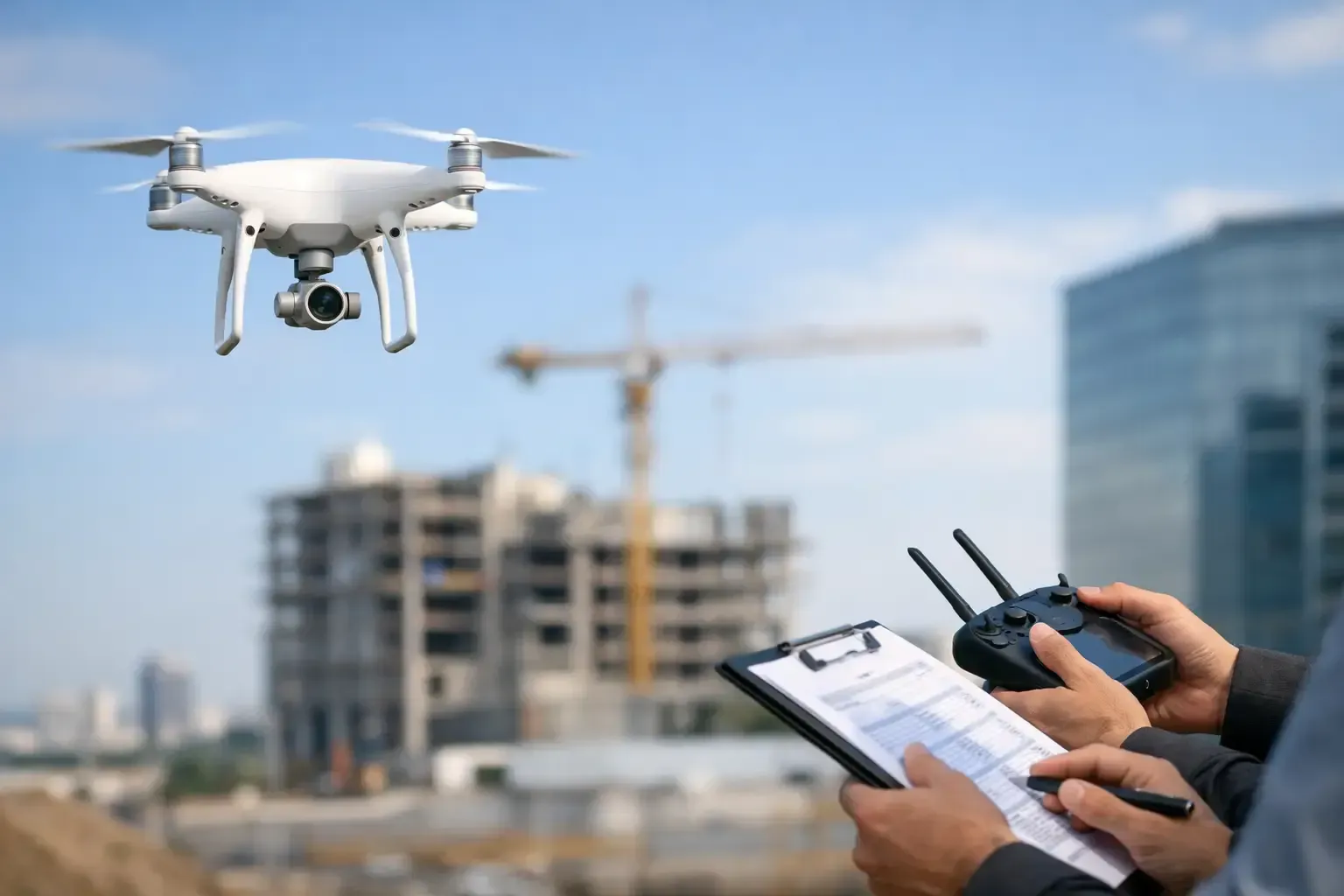
Across the street, a construction crane had rotated into my flight path.
Its boom reached approximately the same altitude as my aircraft.
It struck the drone and knocked it out of the sky.
When I reached the sidewalk...
The drone wasn't damaged.
It was completely destroyed.
Fortunately, DJI Care Refresh worked exactly as promised. After paying the replacement fee, DJI had a brand-new aircraft in my hands within about a week.
But the biggest thing I received wasn't a replacement drone.
It was a lesson.
Experience Doesn't Mean You're Perfect
That crash reminded me of something every pilot needs to remember.
Experience doesn't make you immune to mistakes.
Experience teaches you to learn from them.
Since that day, I've become even more aware of dynamic hazards.
Buildings don't move.
Power poles don't move.
Construction cranes do.
Boom lifts move.
Helicopters appear unexpectedly.
Construction sites change every hour.
Now, whenever I fly near active construction, I'm constantly asking myself:
"What could move into my airspace?"
It's a lesson I now pass along to every student.
If my mistake can save someone else from crashing their drone...
Then it's worth sharing.
🚁 Robert's Pro Tip #10
Never Assume the Sky Will Stay the Same
Many new pilots inspect the area before takeoff...
Then stop paying attention.
Professional pilots continuously scan their surroundings.
The environment is constantly changing.
The safest pilot isn't the one who reacts the fastest.
It's the one who notices changes before they become problems.
Why Real Experience Matters
There are many excellent drone instructors.
Many of them are knowledgeable.
Many have impressive YouTube channels.
Many have created online courses.
But there is one thing that cannot be downloaded.
Experience.
Over the past ten years, I've had the privilege of flying for:
- Commercial real estate firms
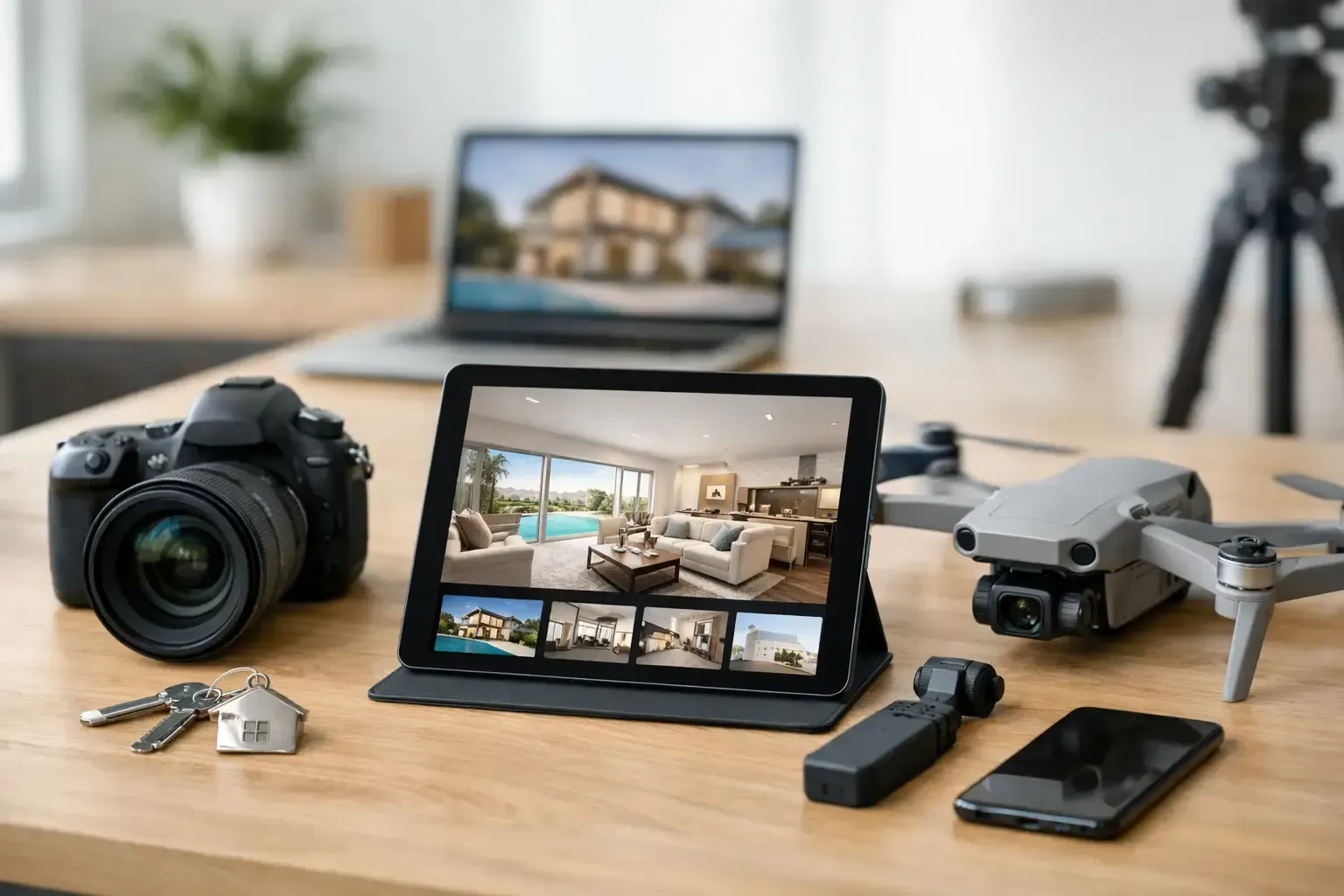
- Residential real estate agents
- Construction companies
- Engineering firms
- Mapping projects
- Marketing agencies
- Event organizers
- Solar panel inspections
- Drone solar panel cleaning
- Window cleaning operations
- FPV productions
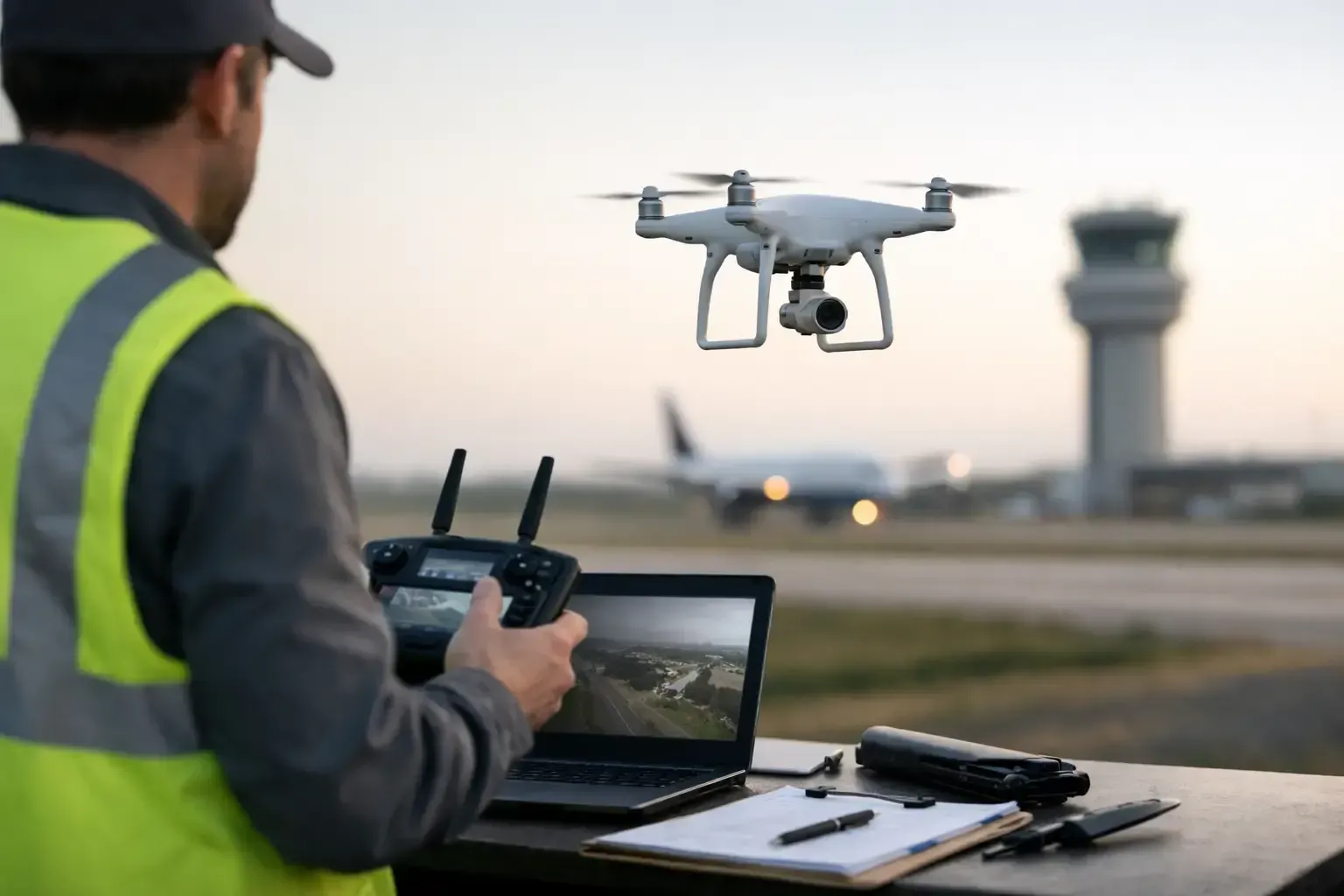
- Airport projects
- Television and media productions
Every project has presented new challenges.
Every challenge has made me a better pilot.
Those experiences become part of every lesson I teach.
When you're standing next to me during a training session, you're benefiting from lessons that took thousands of flights to learn.
🚁 Robert's Pro Tip #11
The Drone Is Only Half the Job
Almost anyone can learn to fly.
Professional pilots learn to think.
They evaluate risks.
They understand light.
They anticipate changing conditions.
They communicate with clients.
They solve problems before they happen.
Flying the drone is actually the easy part.
Thinking like a professional is what separates great pilots from everyone else.
Why I Still Love Flying Drones
After thousands of flights, people sometimes ask if flying has become routine.
The answer is no.
Every flight is different.
Every sunrise looks different.
Every construction project tells a different story.
Every property has unique angles.
Every student asks different questions.
And technology keeps evolving.
The drone I fly today is light-years ahead of the DJI Flame Wheel F450 that first inspired me.
Yet the feeling hasn't changed.
I still get excited every time I launch.
Because every flight offers a new perspective.
That's exactly what I hope every student experiences.
Not just during training.
But every time they fly for the rest of their lives.
Part 4: Frequently Asked Questions, Your Next Steps, and Why I Love Teaching
Frequently Asked Questions About Drone Flight Training
Over the years, I've answered thousands of questions from students before they ever stepped onto the flight field. Here are the ones I hear most often.
Do I Need to Own a Drone Before Taking Lessons?
No.
Many students already own a drone and bring it to class. Others are still trying to decide which drone to purchase.
If you don't own one yet, that's actually an advantage. Students fly my drones and get to experience a few different models.
I can help you choose the right drone based on your goals instead of spending money on features you may never use.
My goal is to help you make a smart investment—not simply buy the most expensive drone.
Should I Buy My Drone Before or After Training?
That depends on your situation.
If you've already purchased one, great—we'll learn on your equipment.
If you haven't, I can help you determine which model fits your needs and your budget.
One of the biggest mistakes new pilots make is buying the wrong drone because someone on YouTube recommended it.
Every student has different goals.
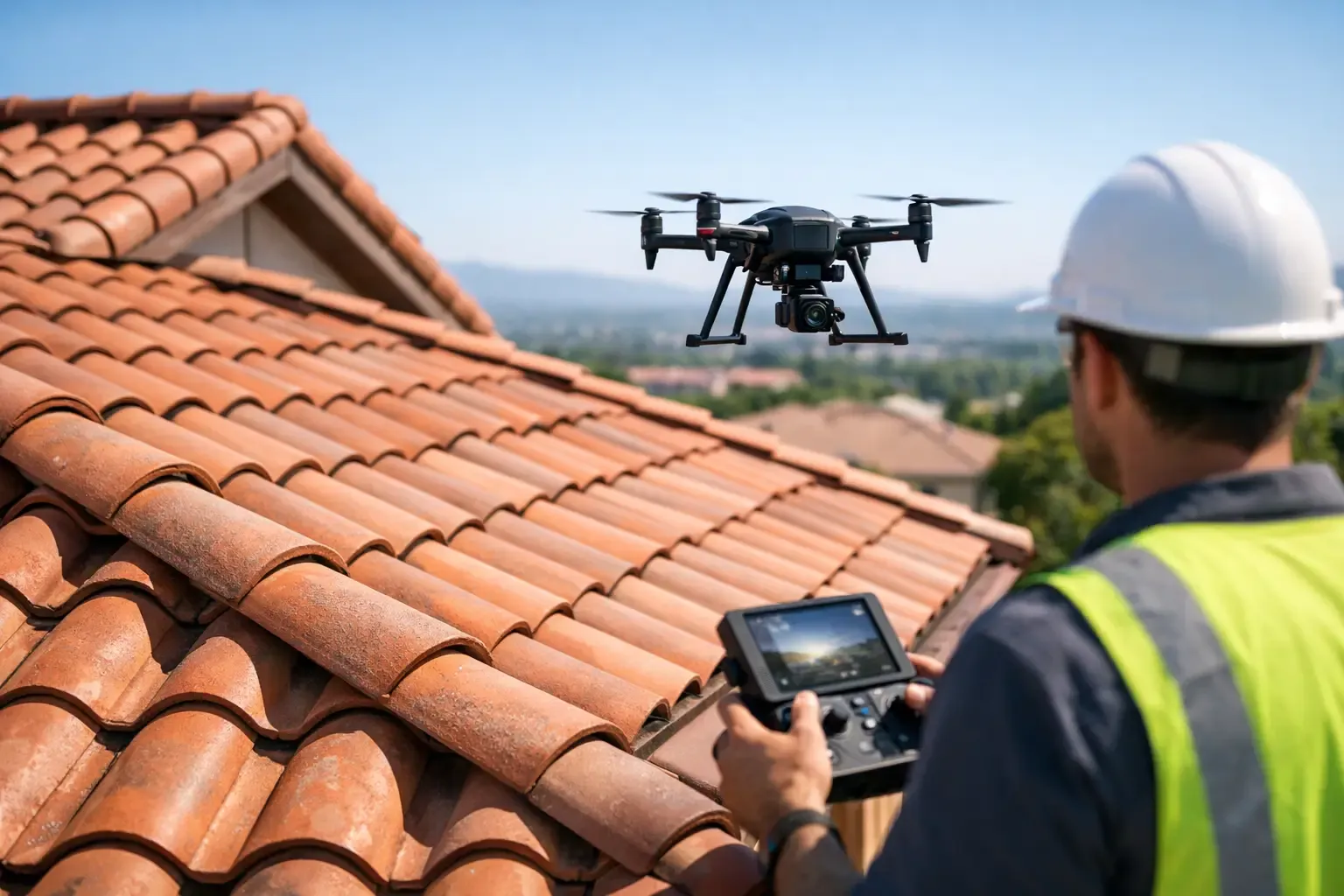
The best drone for a real estate photographer isn't necessarily the best drone for someone who wants to inspect roofs, learn FPV, or simply capture family vacations.
How Long Does It Take to Learn to Fly?
Most students are surprised by how much they accomplish during their very first lesson.
By the end of our first
2 hour session, you'll typically know how to:
Properly set up your drone
Perform a pre-flight inspection
Understand the DJI Fly app
Safely take off and land
Fly controlled patterns
Understand orientation
Capture smooth footage
Build confidence in your flying
Like any skill, mastery comes with practice.
But confidence begins on day one.
Is Drone Flying Difficult?
Learning to fly a modern drone isn't difficult.
Learning to fly it well takes practice.
Today's drones are incredibly intelligent.
They can hover, return home automatically, avoid many obstacles, and assist the pilot in remarkable ways.
But technology doesn't replace judgment.
Good decision-making, smooth control inputs, and safe habits are still learned—not programmed.
That's exactly what we work on together.
Do You Teach FAA Part 107?
Absolutely.
If your goal is to fly commercially, understanding the FAA rules is essential.
Throughout training, we discuss:
Airspace
FAA regulations
Remote ID
Commercial operations
Safe operating practices
Flight planning
I want students to leave understanding not only how to fly safely, but also how to fly legally.
Can You Help Me Start a Drone Business?
Yes.
Many students don't simply want a new hobby.
They want a new career.
Because I've spent more than a decade building Phoenix Drone Pros, I can share lessons that go far beyond flying.
We'll discuss topics like:
Choosing the right equipment
Finding your first clients
Pricing your work
Building confidence
Marketing yourself
Developing professionalism
Creating long-term relationships with customers
Flying is only one part of building a successful drone business.
🚁 Robert's Pro Tip #12
Don't Buy Every Gadget
One of the biggest mistakes new pilots make is spending money on accessories before they've mastered the basics.
I'd much rather see someone invest in:
Extra batteries
Flight time
Training
Practice
Than a backpack full of accessories they'll rarely use.
Experience is always the best investment.
Why Students Choose Phoenix Drone Pros
People don't choose me because I own the newest drone.
They don't choose me because of flashy marketing.
They choose me because they want to learn from someone who is still actively flying commercial missions.
When you train with me, you're learning from someone who has:
More than 10 years of professional drone experience
Completed thousands of commercial drone flights
Personally trained more than 100 students
Worked across Arizona in commercial real estate, construction, mapping, FPV, inspections, airport operations, and specialty aerial projects
Continued learning as drone technology has evolved
Every lesson is based on real-world experience—not theory.
More Than Flying a Drone
At the beginning of this article, I shared the story of my very first drone flight.
I still remember downloading those photographs from my DJI Flame Wheel F450.
I remember thinking...
"I've never seen the world like this before."
That feeling has never gone away.
Today, I experience it every time I watch one of my students complete their first successful flight.
The excitement.
The smile.
The confidence.
That's why I teach.
Not because I enjoy talking about drones.
Because I enjoy watching people discover what drones make possible.
Whether you're 16 years old or 76...
Whether you want to capture family memories...
Start a business...
Earn your FAA Part 107 certificate...
Or simply enjoy one of the most incredible hobbies available today...
I'd love to help you begin that journey.
🚁 Robert's Pro Tip #13
Never Lose the Wonder
The best drone pilots I know never stop being amazed.
Even after thousands of flights, I still pause to appreciate an Arizona sunrise from 400 feet above the ground.
Don't let flying become routine.
Stay curious.
Keep exploring.
Always look for a new perspective.
Ready to Learn how to fly a drone?
If you've made it this far, chances are you're serious about learning to fly.
I'd love the opportunity to help you become a safe, confident, and skilled drone pilot.
When you book a one-on-one training session with Phoenix Drone Pros, you're not getting a scripted class.
You're getting personal instruction from someone who has dedicated the last decade to flying professionally, solving real-world challenges, and helping others succeed.
Whether you're holding a controller for the very first time or preparing to build your own drone business...
I'll meet you where you are.
And together, we'll take your skills to the next level.
Schedule Your
One-on-One Drone Flight Training
If you're ready to gain confidence, improve your flying skills, and learn from real commercial experience, I'd love to work with you.
Phoenix Drone Pros offers personalized one-on-one drone flight training throughout the Phoenix metropolitan area, including:
Phoenix
Mesa
Gilbert
Chandler
Scottsdale
Tempe
Queen Creek
Glendale
Peoria
Surprise
Every lesson is tailored to your goals, your experience level, and your drone.
Your journey starts with a single flight.
Let's make it a great one.
About the Author
Robert Biggs
Founder & Chief Pilot, Phoenix Drone Pros
Robert Biggs has spent more than 10 years as a professional drone pilot, completing thousands of commercial drone flights throughout Arizona. As the founder of Phoenix Drone Pros, he specializes in commercial real estate photography, construction documentation, aerial videography, FPV fly-throughs, mapping, inspections, drone solar panel cleaning, and FAA-compliant commercial drone operations.
Robert has personally trained more than 100 drone pilots, combining hands-on instruction with real-world commercial experience. His passion is helping students become confident, safe pilots who enjoy flying and are prepared for everything from recreational flights to professional drone careers.
A Personal Note From Robert
When people ask me why I still teach after all these years, my answer is simple.
I remember exactly what it felt like to fly a drone for the first time.
I remember the excitement.
I remember the wonder.
And I remember realizing that I had found something that would change my life.
If I can help someone else experience that same feeling—and give them the confidence to fly safely, creatively, and responsibly—then every lesson is worth it.
I hope to see you on the flight field soon.
— Robert Biggs