Phoenix Drone Pros
Blog
Drone mapping vs land surveying: learn where each method fits, what each delivers, and when property and construction projects need both.
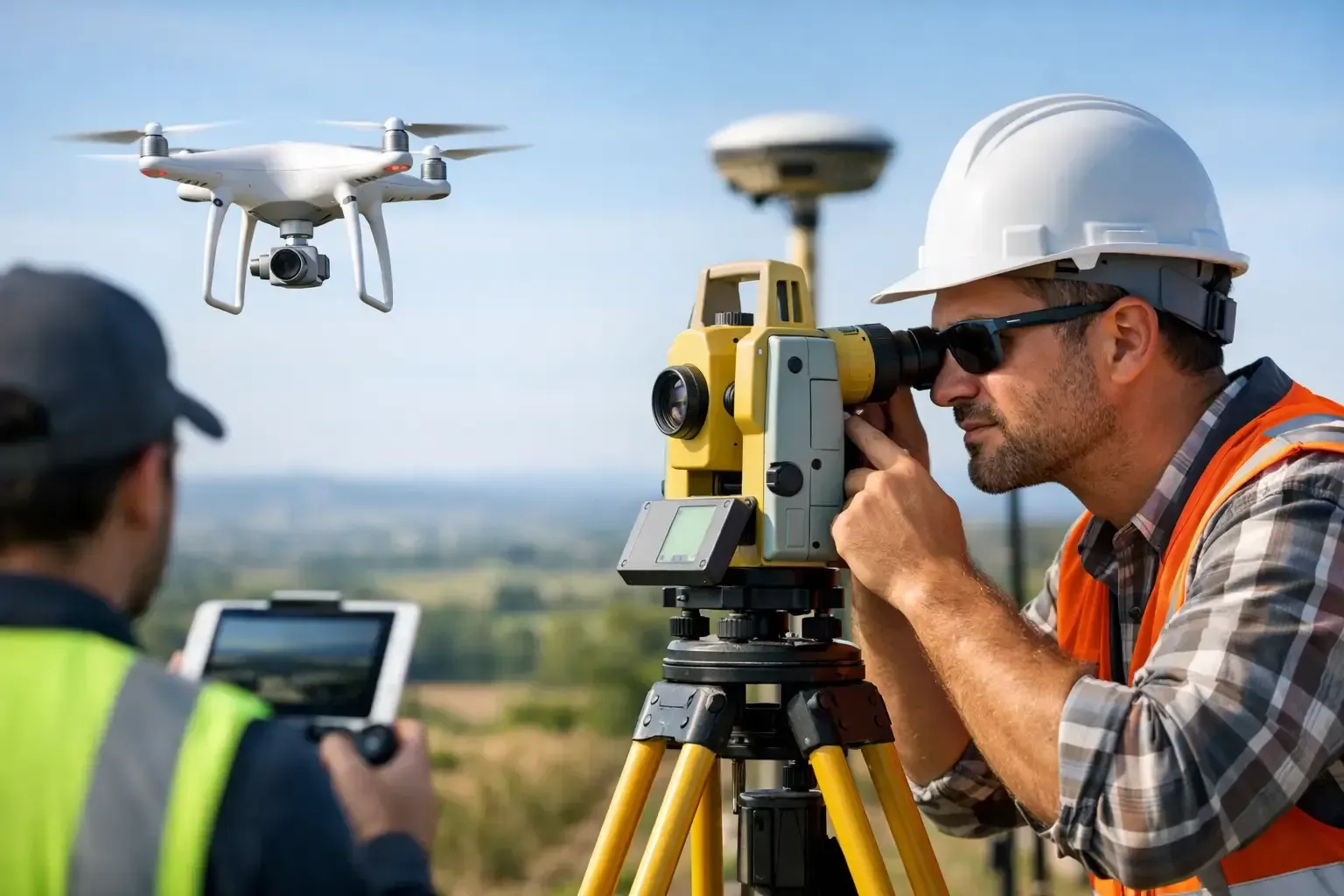
If you are planning a site scan, boundary check, grading review, or development project, the question is rarely whether aerial data is useful. The real question is drone mapping vs land surveying - and which one gives you the information you can actually act on without creating risk later.
That distinction matters more than many property owners, contractors, and developers expect. Drone deliverables can be fast, detailed, and cost-effective. Land surveys can establish legal boundaries and support design, permitting, and recorded documents. They are not interchangeable, and using one in place of the other can create expensive problems.
Drone mapping vs land surveying: the core difference
Drone mapping is a remote data-capture method. A drone flies a planned route, collects overlapping images or sensor data, and software turns that data into outputs such as orthomosaics, point clouds, elevation models, and 3D site views. It is built for visibility, measurement, progress tracking, and fast site documentation.
Land surveying is a licensed professional service that determines and documents positions, boundaries, elevations, and other site conditions using established surveying methods and legal standards. Depending on the job, that can include total stations, GNSS receivers, control points, level runs, plats, boundary research, and formal signed deliverables.
In plain terms, drone mapping helps you see and analyze a site. Land surveying helps you define it in a legal and engineering context.
That is why the debate around drone mapping vs land surveying can be misleading. In many projects, it is not an either-or decision. It is a matter of matching the right tool and the right professional standard to the decision you need to make.
Where drone mapping excels
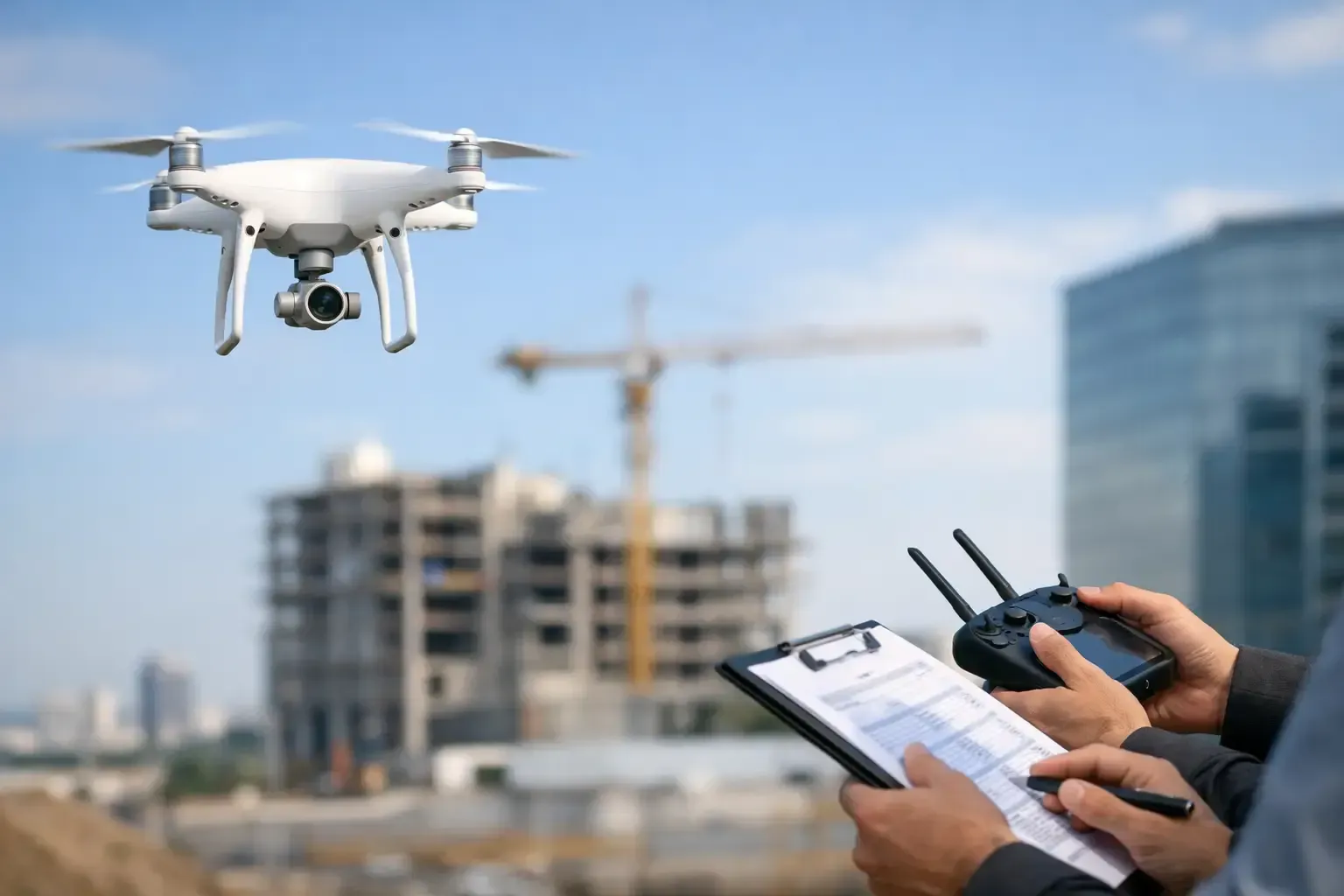
Drone mapping is strongest when speed, coverage, and repeatability matter. On construction sites, it can document current conditions across a large area in a single flight. For developers, it can provide a broad visual understanding of terrain, access routes, stockpiles, drainage paths, and site changes over time. For property managers and owners, it can reduce the need to physically access difficult or unsafe areas.
A well-executed drone mapping mission can also support volumetric measurements, topographic visualization, cut-and-fill planning discussions, and progress reporting. If you need a current surface model of an active site, a drone can often capture it much faster than traditional ground-only methods. That speed has real value when schedules are tight and multiple stakeholders need updated information.
Another advantage is consistency. Flights can be repeated on a regular schedule, which makes drone mapping useful for monthly progress documentation, investor reporting, change tracking, and contractor coordination. When operations are handled by an FAA-certified, insured team with experience around active jobsites and controlled airspace, the process is efficient and practical.
Still, speed should not be confused with legal authority. Drone data may be highly accurate for many business uses, but its usefulness depends on how the project is set up, what control is used, what tolerances are required, and what the deliverable is meant to support.
Where land surveying remains essential
Land surveying becomes essential when the work affects property rights, legal descriptions, recorded documents, design control, or formal construction staking. If you need to confirm a boundary, resolve an encroachment issue, prepare a subdivision plat, support permitting requirements, or establish survey-grade control for engineering and construction, you need a licensed land surveyor.
That is because land surveying is not just about measuring. It includes legal interpretation, standards of care, and professional responsibility. A surveyor is not simply collecting points. They are evaluating deeds, reconciling records, applying monuments and evidence, and producing work that may be relied on in design, title, financing, and dispute resolution.
This is where many projects go off track. A client sees a detailed orthomosaic or 3D model and assumes it can answer boundary or legal positioning questions. In most cases, it cannot. A drone map may show a fence line clearly, but a fence is not the same as a legal boundary. It may show where a curb appears to sit, but that does not replace surveyed control tied to a recognized standard.
Accuracy is not a one-word answer
One reason people compare drone mapping vs land surveying so often is the question of accuracy. The problem is that accuracy is not a single number that applies to every site and every workflow.
Drone mapping accuracy depends on several factors: flight altitude, camera quality, overlap, ground control, check points, surface conditions, vegetation, shadows, and processing methods. On an open site with good control, drone mapping can produce excellent relative accuracy and very useful elevation data. On a heavily vegetated site or a corridor with obstructions, results may be more limited.
Traditional surveying also varies by method and purpose, but it is designed around known standards and field procedures that support higher-confidence control and legal defensibility. If your project requires tight tolerances for staking utilities, establishing finished floor elevations, or certifying boundary corners, survey-grade work is the standard for a reason.
So when someone asks which is more accurate, the better question is this: accurate enough for what decision? If you are tracking earthwork progress, drone mapping may be exactly right. If you are settling a boundary dispute, it is not.
Cost, schedule, and project scale
Drone mapping is often more cost-effective for large-area visual documentation and recurring site capture. A single flight can cover ground that would take much longer to walk with conventional field methods alone. That makes it attractive for construction managers, developers, commercial property teams, and owners who need frequent updates without slowing the job.
Land surveying typically costs more because the scope is different. You are paying for licensed expertise, research, field verification, control, legal responsibility, and formal deliverables. When the work must stand up to design review, permit review, or legal scrutiny, that added cost is part of reducing downstream risk.
For many clients, the smartest move is not replacing one with the other. It is using each where it creates the most value. A surveyor may establish control and legal framework, while a drone team captures ongoing site data quickly and safely. That combination often improves both project visibility and decision-making.
When you need drone mapping, land surveying, or both
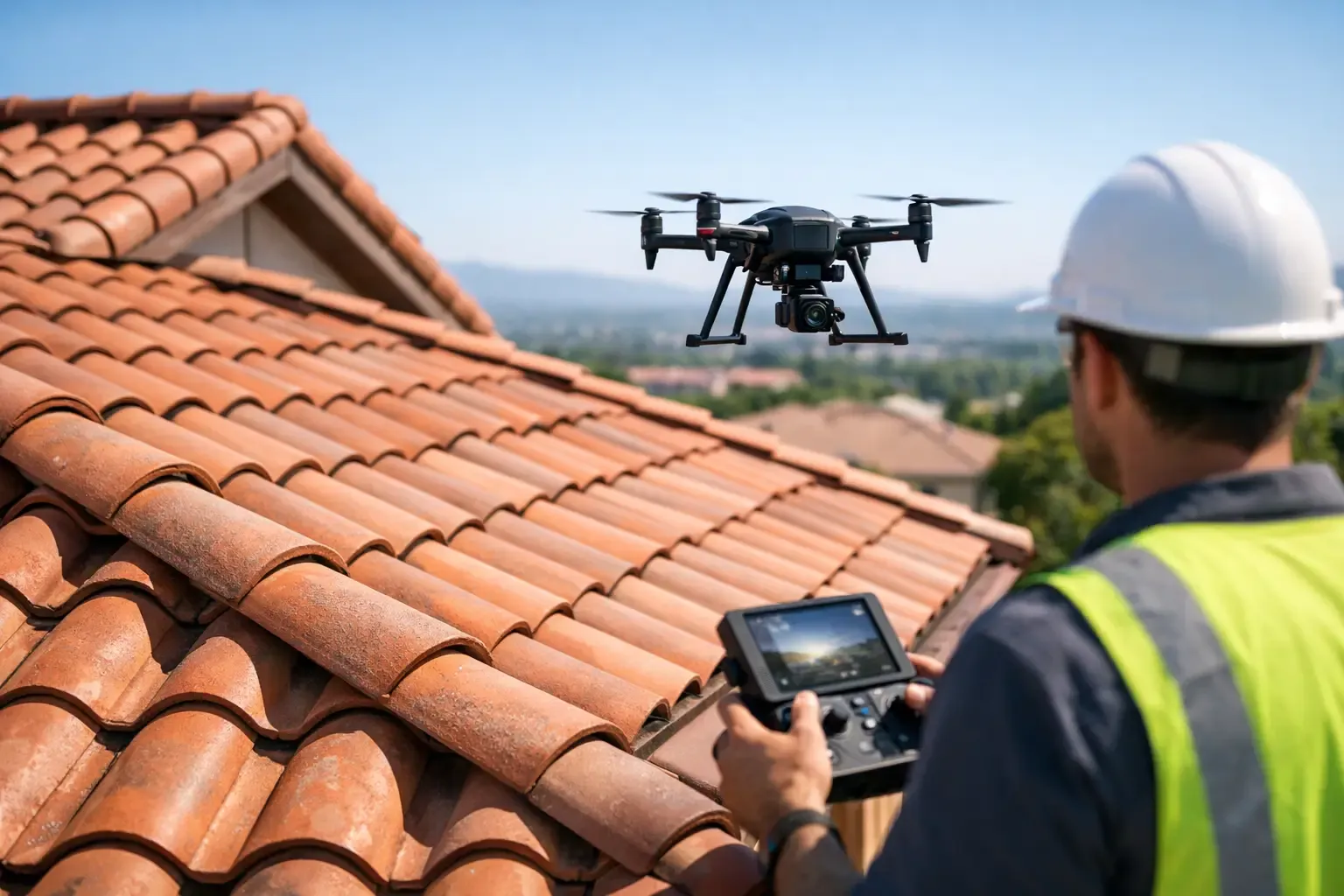
If your goal is marketing visuals, site progress documentation, stockpile measurement, roof condition visibility, general topographic context, or recurring construction updates, drone mapping is often the right place to start. It gives stakeholders a current, shareable view of the site and can support planning conversations with much less delay.
If your goal is establishing boundaries, preparing legal documents, supporting engineering design, staking improvements, or meeting municipal or lender requirements, land surveying is the right service.
If your project involves active development, grading, utility coordination, entitlement planning, or preconstruction analysis, you may need both. Survey control and legal certainty on the front end, plus drone-based documentation and monitoring throughout the life of the job, can be a very efficient setup.
That is especially true in fast-moving markets where timelines are compressed and sites change weekly. For property professionals in the Southwest, where large parcels, new development, and challenging site conditions are common, the ability to pair reliable aerial capture with the right survey scope can prevent avoidable delays.
The compliance factor matters more than most clients realize
Not every drone operator is equipped for serious project work. Mapping flights near active construction, commercial assets, or controlled airspace require more than a camera and software subscription. They require planning, safe operating procedures, regulatory awareness, and deliverable discipline.
That is why clients should look closely at who is collecting the data, how flights are planned, whether the operator is FAA-certified and insured, and whether they understand the end use of the deliverables. A polished map is only useful if it was captured properly and fits the project need.
The same is true on the surveying side. If the project calls for survey work, bring in a licensed survey professional early. Waiting too long often leads to redesigns, rework, or conflicts between assumed site conditions and documented ones.
At Phoenix Drone Pros, we see the best results when clients frame the need correctly from the start. If the objective is visual intelligence, recurring progress capture, or aerial site data for planning and reporting, drone mapping can be a strong solution. If the objective is legal boundary definition or survey-certified control, that work belongs with a licensed surveyor.
The best projects are not built on the cheapest data or the fastest data alone. They are built on data that matches the decision in front of you, with the right operator behind it.