Phoenix Drone Pros
Blog
Active jobsite drone safety protects crews, schedules, and data quality. Learn how certified operators manage risk on busy construction sites.
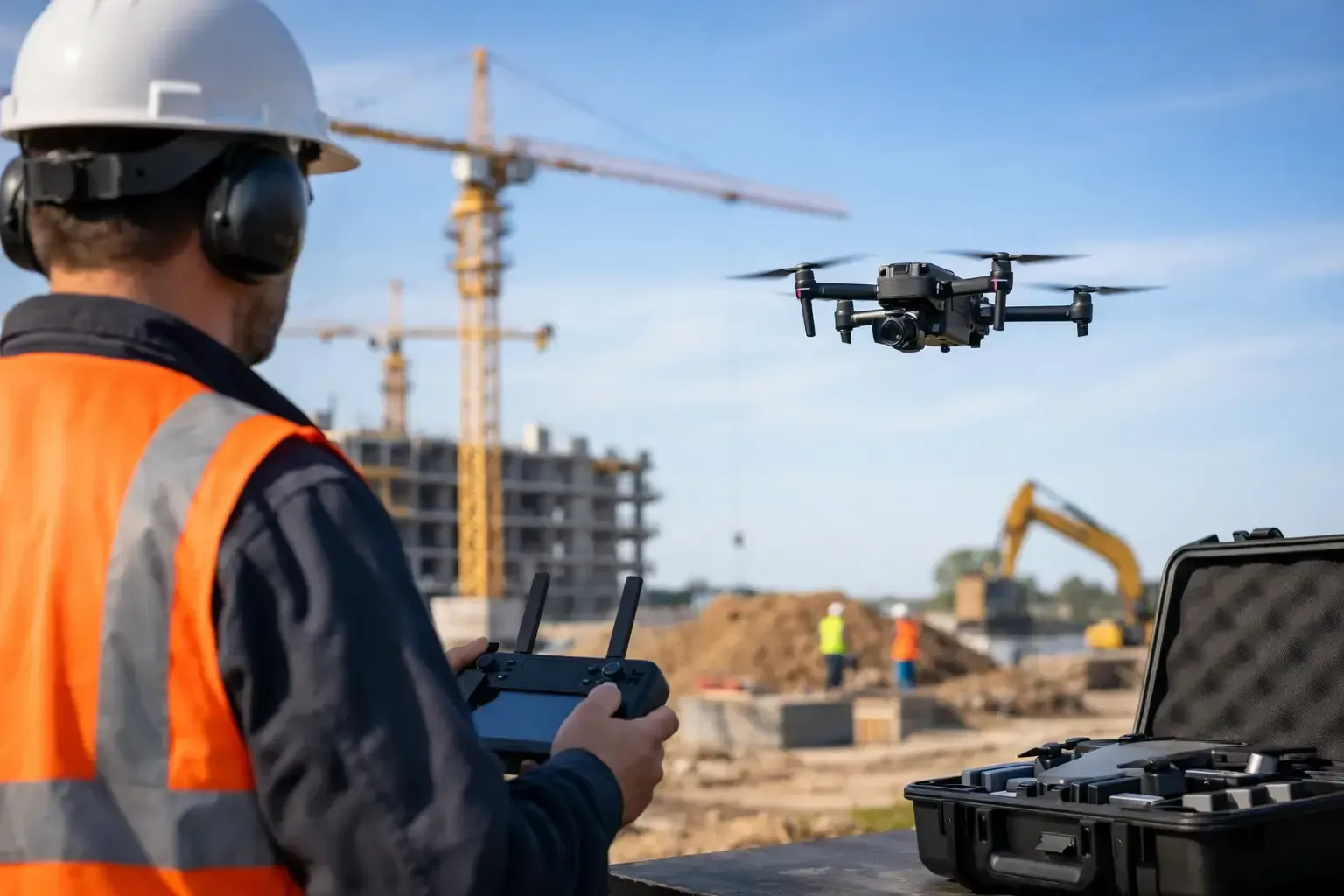
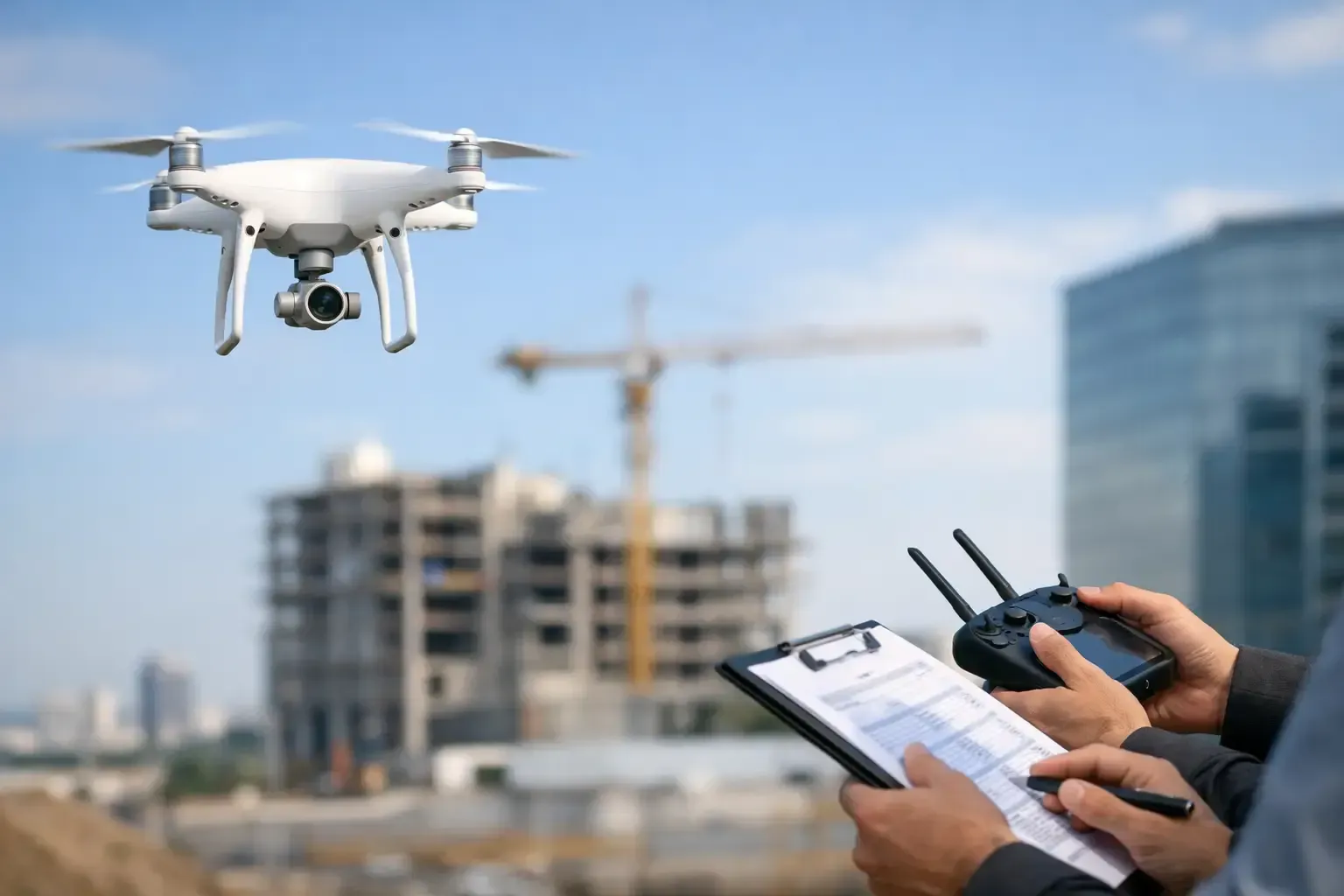
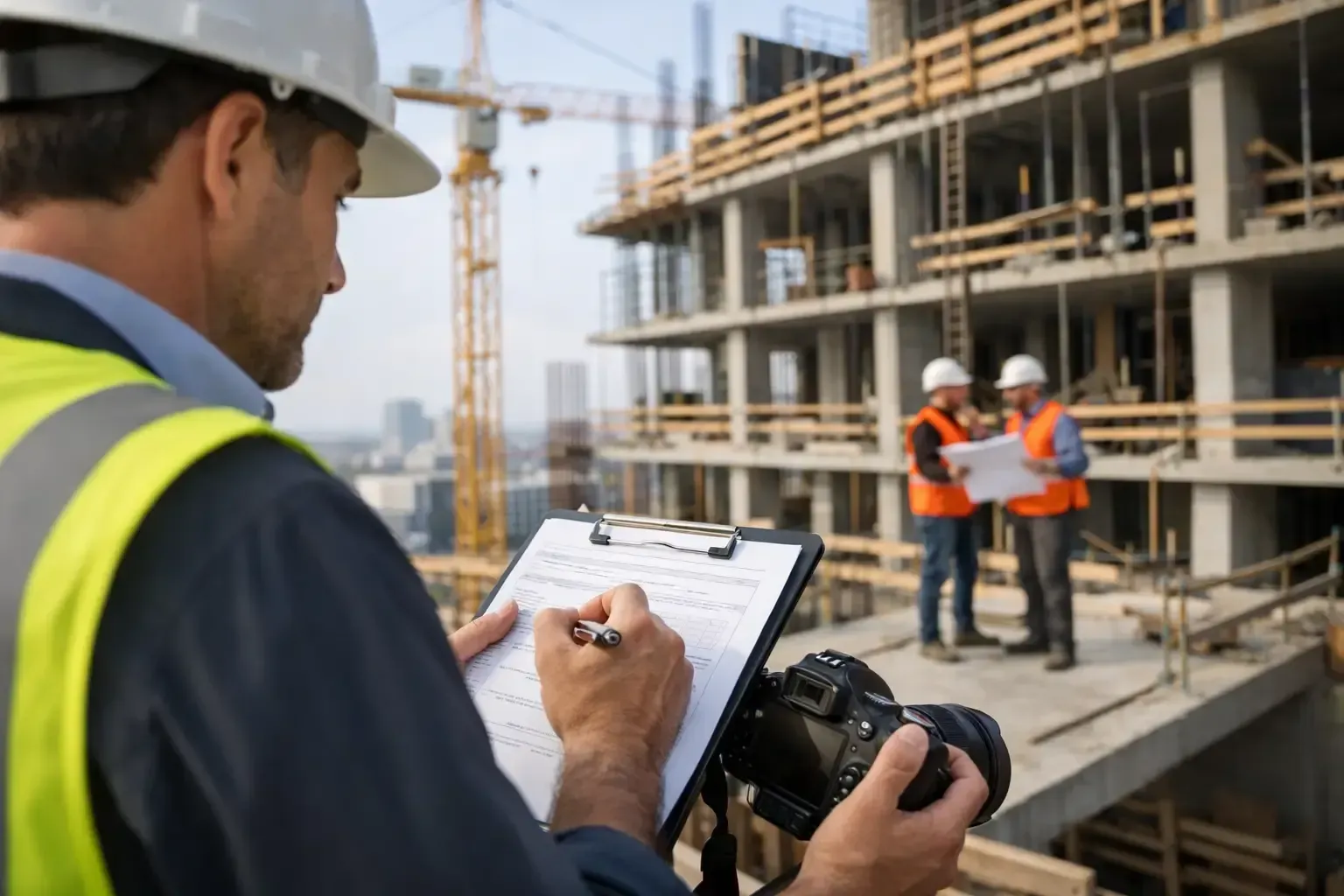
A drone flight over an active construction site should never feel improvised. If equipment is moving, crews are rotating through tasks, and schedules are tight, active jobsite drone safety has to be planned like any other controlled operation on site. The drone is not just capturing footage - it is entering a live work environment with people, machinery, noise, dust, and changing hazards.
For construction managers, developers, and contractors, that matters for more than compliance. A poorly managed drone flight can interrupt work, create distractions, introduce liability, and produce incomplete data. A properly managed one does the opposite. It documents progress clearly, supports reporting, and adds visibility without getting in the crew's way.
Why active jobsites require a different safety standard
A vacant property is one thing. An active site with lifts, cranes, delivery vehicles, subcontractors, and changing access points is another. Conditions shift by the hour, and that makes drone planning more complex than many clients expect.
The main issue is not just the aircraft. It is the environment around it. Workers may not hear instructions over equipment. New subcontractors may arrive after the morning briefing. Materials can change line of sight. Wind behaves differently around partially completed structures than it does over open ground. Even a short flight can introduce risk if the operator is not coordinating with the site team.
That is why active jobsite drone safety starts before takeoff. It begins with a clear understanding of the site layout, current phase of work, restricted zones, overhead hazards, crew locations, and the reason for the flight itself. A progress photo mission has a different risk profile than a roof inspection or a detailed facade scan near active trades.
What proper active jobsite drone safety looks like
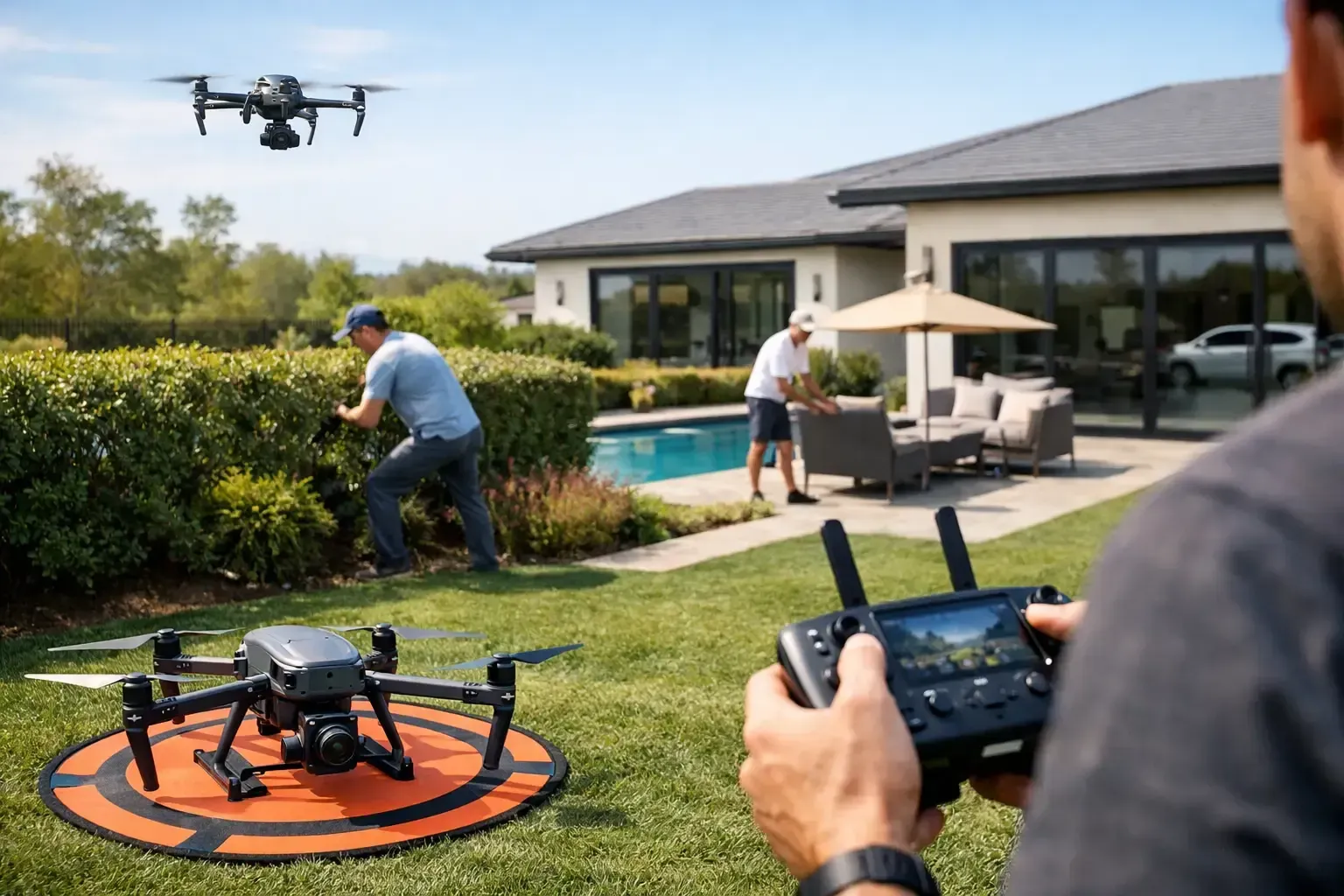
On a professional site, safety is not a slogan. It is a process. The operator should be thinking through flight paths, emergency procedures, launch and recovery zones, visual observer positioning, communication methods, and how to avoid interfering with work already in motion.
In practice, that usually means coordinating with the superintendent or project manager before arrival, confirming where crews will be working during the flight window, and choosing a takeoff area away from traffic and staging activity. It also means identifying where the drone should not go, even if the camera angle would be useful.
There is always a trade-off between getting the perfect shot and keeping operations predictable. On an active site, the safer choice wins. That may mean flying at a different time of day, adjusting altitude, shortening the mission, or splitting one visit into separate flights for separate deliverables.
Pre-flight coordination matters more than the aircraft
Clients often focus on the drone model, camera quality, or whether thermal capability is available. Those details matter, but the bigger factor on a live site is operational discipline.
Before wheels leave the ground, a qualified operator should confirm airspace status, weather, magnetic or GPS interference concerns, crew activity, and any site-specific constraints such as crane swing radius, concrete pours, or utility work. If the jobsite sits in controlled airspace, the planning bar goes even higher. Authorization, altitude limits, and timing all need to be accounted for before the field team arrives.
This is where FAA certification and commercial experience make a real difference. Flying near active work is not the place for guesswork, casual communication, or a hobby mindset.
Site communication reduces avoidable risk
A drone pilot can technically operate safely and still create confusion if no one on site knows what is happening. That confusion leads to distraction, unnecessary stoppages, and frustration from field crews.
The better approach is straightforward. The site lead knows when the flight is happening, why it is happening, where launch and recovery will occur, and what areas the drone will cover. If certain crews need to avoid a zone for a short window, that should be coordinated clearly. If no changes are needed, that should be clear too.
Good communication keeps the drone from becoming an interruption. It turns the flight into a planned site activity with a defined scope and timeline.
Common hazards during construction drone operations
Construction sites create layered hazards that do not exist in standard real estate or open-property flights. Some are obvious, and some are easy to underestimate.
Overhead obstructions are a major one. Cranes, temporary power lines, steel framing, scaffolding, and partially enclosed structures can complicate both navigation and emergency landing options. Dust is another concern, especially in grading, demolition, or dry conditions common across the Southwest. Reduced visibility and airborne particles can affect both situational awareness and equipment performance.
Human factors are just as important. Workers may look up at the drone instead of staying focused on their task. Vehicle operators may not expect an aircraft overhead. On noisy sites, verbal warnings may not carry far enough. These are not reasons to avoid drone use. They are reasons to manage flights carefully.
Battery management is also more serious on active jobsites. A low-battery landing on an empty lot is inconvenient. A forced landing near crews or equipment is a completely different event. Conservative flight planning, short mission segments, and a clean return-to-home strategy are part of safe operations, not overcaution.
Choosing the right time to fly
One of the simplest ways to improve safety is to choose a smarter flight window. Early morning may offer better light and calmer wind, but that depends on the phase of work and when crews mobilize. Midday may be acceptable for broad progress capture, while close-range inspection work may need a quieter site window.
There is no single best time for every project. It depends on the deliverable, the jobsite schedule, and how much activity is happening near the target area. If a concrete pump, crane pick, or roofing crew is active in the same zone, the flight should be adjusted. The goal is not to force the mission into the schedule. The goal is to support the schedule without adding friction.
That is especially true for recurring progress documentation. When flights happen weekly or monthly, consistency matters, but so does flexibility. A professional operator can maintain useful visual continuity while still adapting to site conditions.
Safety, compliance, and insurance work together
On commercial jobsites, safety is tied directly to liability exposure. If a drone operator cannot explain their certification status, operating procedures, insurance coverage, and site coordination process, that should be a concern.
Compliance is not paperwork for its own sake. It is part of risk control. FAA rules establish the baseline, but active construction environments often require a more conservative standard than the bare minimum. Insurance matters too, because sites involve people, equipment, schedules, and contractual obligations. The cost of one avoidable incident can reach far beyond the value of the flight itself.
For clients, this means hiring based on more than image quality. A polished demo reel does not tell you how an operator handles controlled airspace, moving crews, or a site superintendent who needs the flight done without slowing production. Those are field-experience questions.
What clients should expect from a professional drone partner
If you are bringing in a drone operator for an active construction site, expect a process that feels organized from the first conversation. You should be asked what the deliverable is, what the site conditions look like, whether the property is active, who the point of contact is, and whether any work zones or hazards need to be avoided.
You should also expect realism. Sometimes the answer is yes, we can fly today. Sometimes the right answer is not yet, not from that launch point, or not during that operation. That is not hesitation. That is professionalism.
Phoenix Drone Pros approaches active site work with that standard in mind - certified operations, insured flights, clear communication, and practical field judgment that respects the pace of the job. For project teams, that means aerial documentation that adds value without adding uncertainty.
Active jobsite drone safety protects the project, not just the flight
When drone operations are handled correctly, the value goes beyond clean footage and progress photos. You get reliable visual records, fewer disruptions, better reporting, and a safer process for everyone on site. That makes the drone a useful construction tool rather than a moving risk.
The best drone flights on active jobsites are often the ones that look easy from the outside. That usually means the hard work happened before takeoff - planning the mission, coordinating with the field team, respecting the site, and making disciplined decisions in real time. If your site is busy, that is exactly what is required.