Phoenix Drone Pros
Blog
Learn when a pressure washing drone service is the safer, faster choice for roofs, facades, and hard-to-reach exterior cleaning jobs.
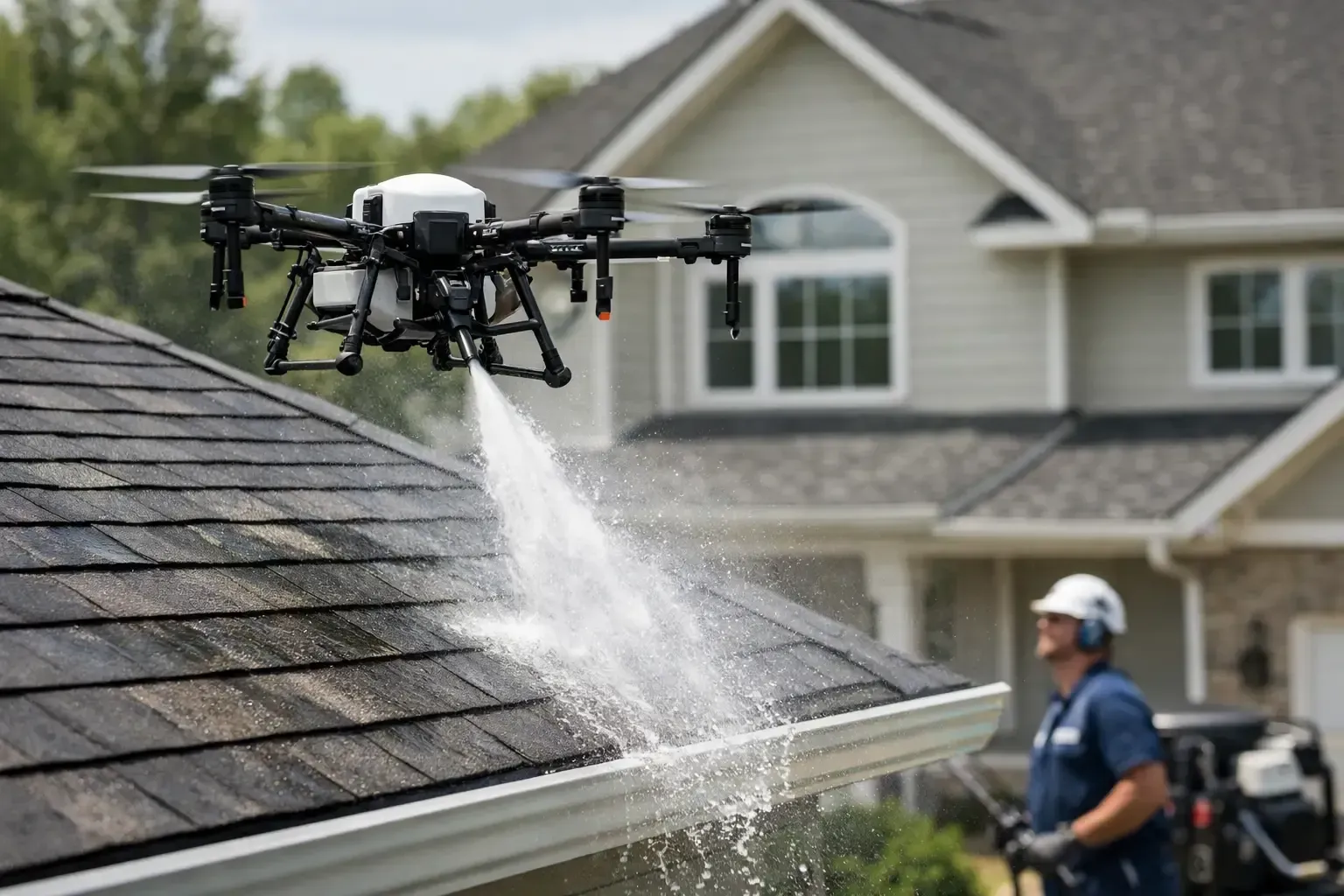
Cleaning a three-story building with lifts, ladders, and a crew tied up for days is not always the smartest option. A pressure washing drone service can reduce ground risk, reach difficult exterior surfaces faster, and help property owners clean large areas with less disruption to tenants, customers, or active job sites.
That does not mean it is the right fit for every property. Like any specialized service, drone-based exterior cleaning works best in specific conditions. The real question is not whether the technology looks impressive. It is whether it improves safety, efficiency, and results on your building.
What a pressure washing drone service actually does
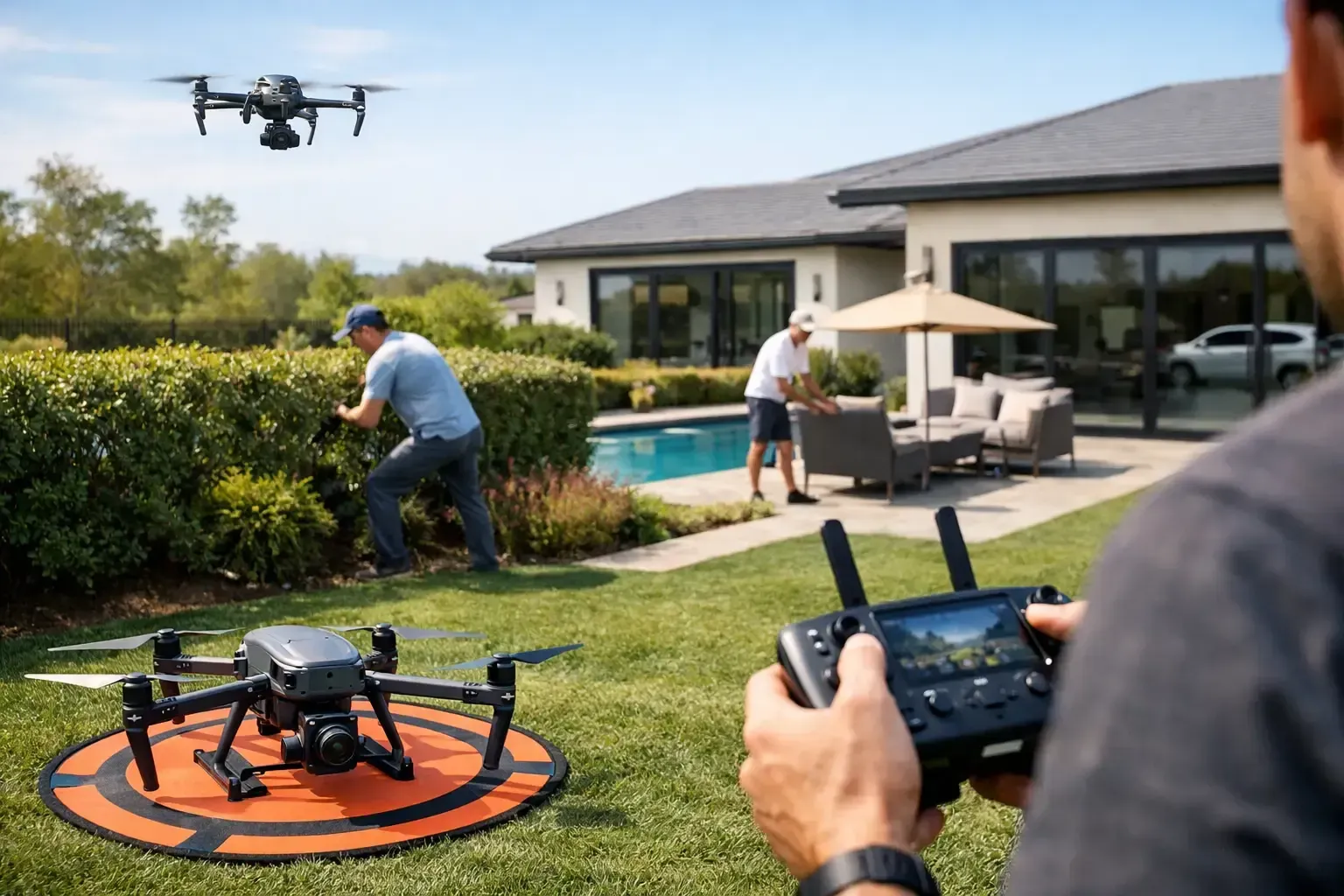
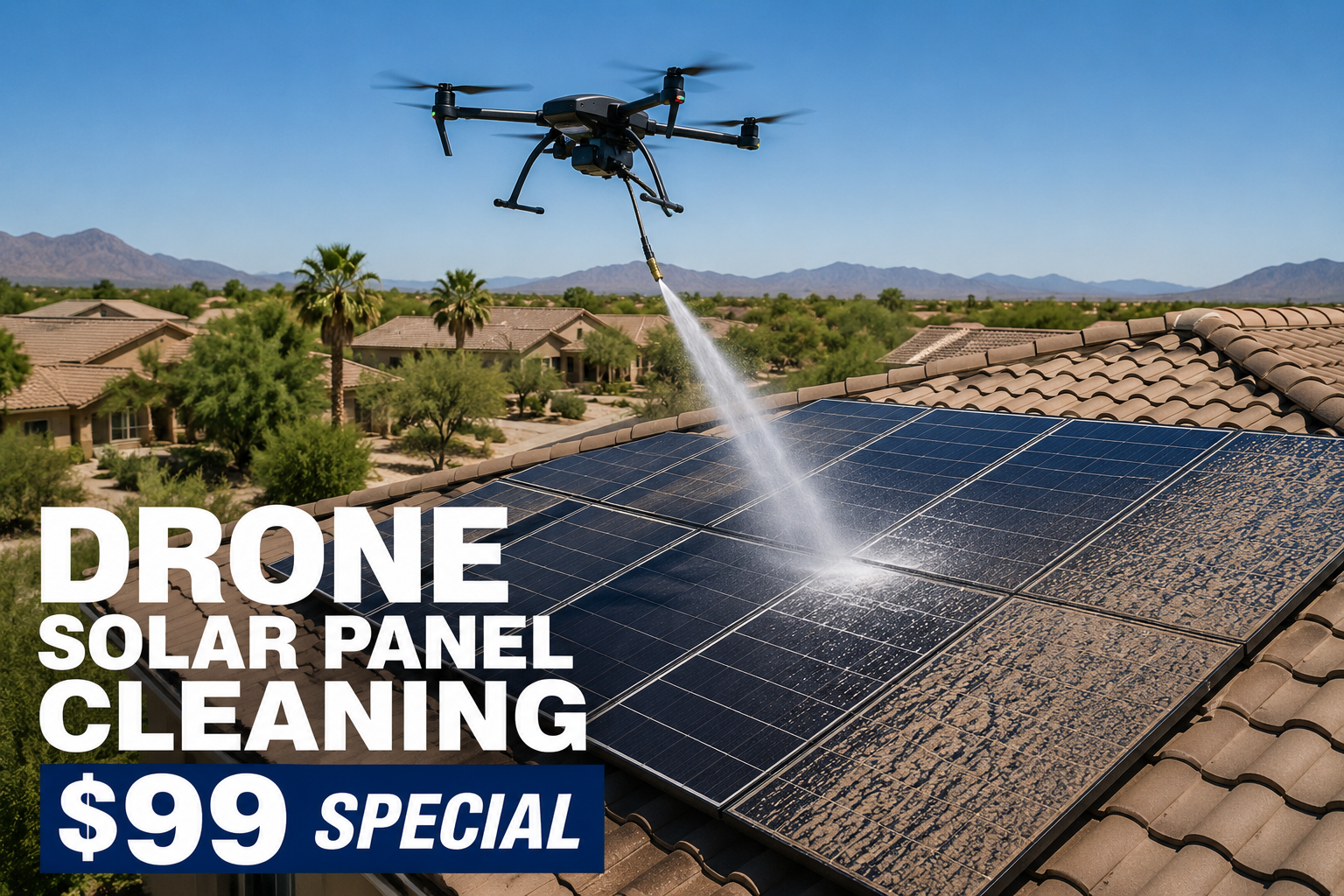
A pressure washing drone service uses a heavy-lift drone equipped to spray water or cleaning solution onto exterior surfaces from the air. Instead of relying entirely on scaffolding, boom lifts, rope access, or workers leaning off roof edges, the pilot controls the cleaning path from the ground while managing flight stability, spray angle, and coverage.
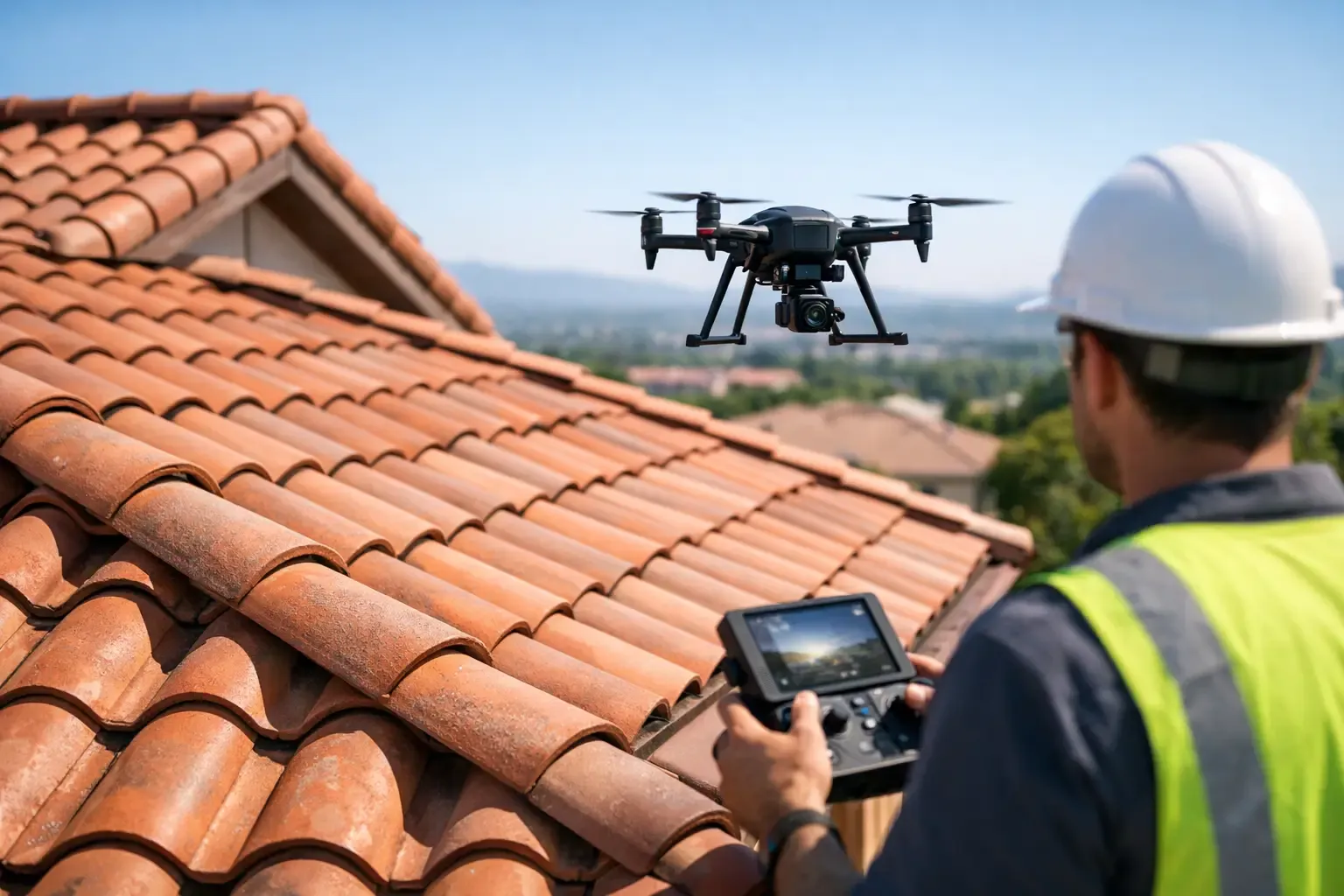
This approach is especially useful on buildings with difficult access points, large vertical surfaces, or areas where setup time for traditional equipment can become a major cost driver. It can be used on facades, exterior walls, roofs, and other hard-to-reach sections where ground-based cleaning is slower or creates more exposure to fall hazards.
In practice, success depends on more than the drone itself. The operator needs commercial flight experience, a clear understanding of airspace rules, a safe work zone, and the judgment to know when drone cleaning is appropriate and when another method will deliver a better result.
Where drone cleaning works best
The strongest use cases are usually commercial and multi-structure properties. Think apartment buildings, self-storage facilities, warehouses, churches, schools, retail centers, hotels, and industrial buildings with large exterior elevations. These are the jobs where access challenges are real and traditional setup can eat up time before cleaning even begins.
It also makes sense for roofs and exterior surfaces that need regular maintenance but are awkward to reach safely. In the Southwest, dust, pollen, hard water staining, bird droppings, and general environmental buildup can shorten the time between cleanings. A drone can help maintain those surfaces without turning every service visit into a major equipment mobilization.
For some residential properties, the value is there too. Homes with steep rooflines, limited side-yard access, delicate landscaping, or features that make ladder placement difficult may benefit from an aerial cleaning approach. But smaller single-story homes often do not need it. In those cases, traditional pressure washing may be simpler and more cost-effective.
Safety is the real advantage
The biggest reason clients ask about a pressure washing drone service is usually speed. The bigger advantage is risk reduction.
Exterior cleaning at height has obvious hazards. Ladders shift. Roof edges create fall exposure. Lifts require stable positioning and clear access. Rope systems demand highly specialized crews. When a drone can complete the work from a controlled position on the ground, the job can often be performed with less direct worker exposure to those risks.
That said, safer does not mean casual. Drone cleaning still requires planning around pedestrians, vehicles, power lines, surrounding structures, and weather. On occupied commercial properties, the operator must think through exclusion zones, overspray control, and how to keep the work area secure while maintaining normal site operations as much as possible.
This is where professional standards matter. FAA-certified flight operations, insurance coverage, and real field experience are not marketing extras. They are part of what separates a professional service provider from someone simply flying hardware over your property.
Speed matters, but only if quality holds up
A drone can often clean large vertical surfaces faster than a crew that needs repeated lift repositioning or extensive ladder work. On the right building, that can mean shorter service windows, less site disruption, and lower labor complexity.
But speed is only valuable if the finish meets the job standard. Cleaning effectiveness depends on the surface type, the level of buildup, the spray system being used, and whether the task is light washing, soft washing, or more aggressive debris removal. Some surfaces respond well to aerial application. Others need closer manual attention, spot treatment, or follow-up work from the ground.
That is why experienced operators will talk through the condition of the property before promising a one-size-fits-all result. Painted stucco, metal panels, membrane roofing, solar arrays, and masonry all behave differently under water pressure and cleaning solutions. The right service plan starts with the material, not the gadget.
When traditional cleaning may be the better choice
Not every cleaning project should be handled by drone. If a property has tight overhead obstructions, unstable wind conditions, highly intricate architectural details, or surfaces that require delicate hand treatment, a traditional method may be more appropriate.
The same is true for small, easily accessible buildings where a technician can complete the job safely from the ground or a short ladder in a fraction of the time. In those situations, using a drone may add complexity instead of removing it.
There are also cases where a hybrid approach works best. A drone can handle broad upper elevations or roof sections, while a ground crew finishes detail work around entrances, windows, signage, or heavily stained areas. For many commercial properties, that balance gives the best combination of efficiency and finish quality.
What property managers and owners should ask before booking
If you are evaluating a provider, ask practical questions. Are the pilots FAA-certified? Is the company insured for commercial drone work? Have they handled cleaning operations around occupied buildings, active job sites, or controlled airspace? Do they understand how to protect surrounding surfaces, vehicles, and pedestrian areas?
It is also worth asking how they assess fit. A dependable operator should be willing to say when drone cleaning is not the best solution. That kind of honesty usually saves the client time and money.
For commercial clients, scheduling and communication matter almost as much as the cleaning itself. You want a provider that can coordinate with tenants, property staff, or site supervisors, define the service window clearly, and operate in a way that does not create unnecessary friction on the property.
Why this service is gaining traction in the Southwest
In markets like Phoenix and San Antonio, buildings take a beating from heat, dust, storms, and long dry stretches that leave visible residue on exterior surfaces. Property appearance matters, whether you are managing a retail center, preparing a building for leasing, maintaining a community association, or protecting a home investment.
Aerial cleaning has gained attention because it aligns with the priorities many owners already have - reduce risk, limit downtime, and keep maintenance moving without turning a routine cleaning job into a large site operation. For bigger assets, especially those with height or access challenges, the value case is straightforward.
Companies like Phoenix Drone Pros approach this work from the operational side first. That means compliance, insurance, controlled flight procedures, and job planning are treated as core requirements, not afterthoughts. For clients, that translates into a service that feels organized, predictable, and professionally managed.
The right service depends on the property
A pressure washing drone service is not a replacement for every exterior cleaning method. It is a specialized tool that solves specific problems very well. When a property has height, access limitations, safety concerns, or a need to minimize disruption, drone-based cleaning can be the better option.
The smartest next step is a realistic assessment of the building itself - its materials, height, layout, occupancy, and cleaning goals. If the method fits the job, the payoff is usually clear: safer access, faster execution, and a cleaner property without the usual equipment burden. For owners and managers trying to keep exterior maintenance efficient, that is a practical advantage worth paying attention to.