Phoenix Drone Pros
Blog
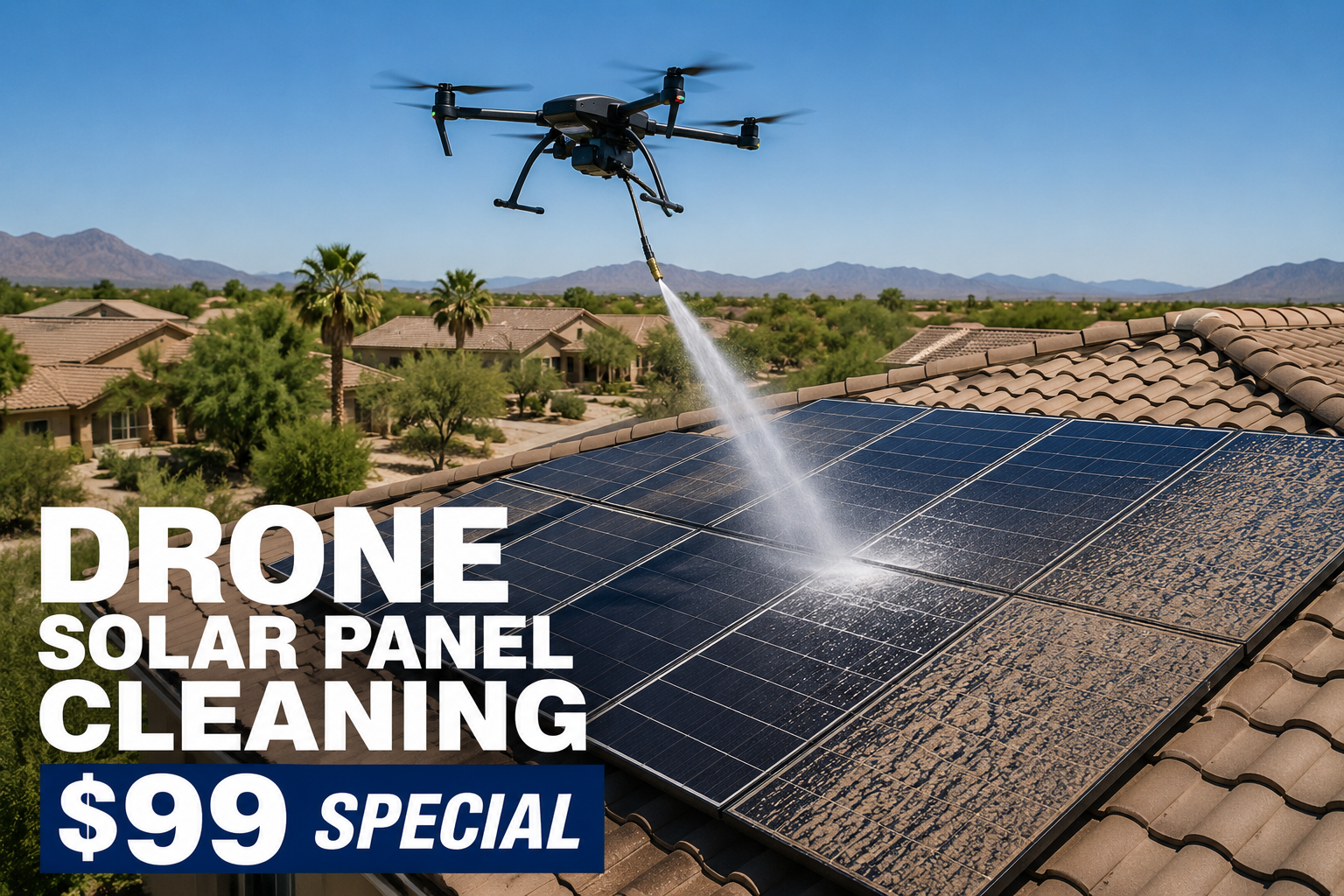
Drone solar panel cleaning helps large solar sites cut water use, reduce labor risk, and restore output with faster, safer maintenance.
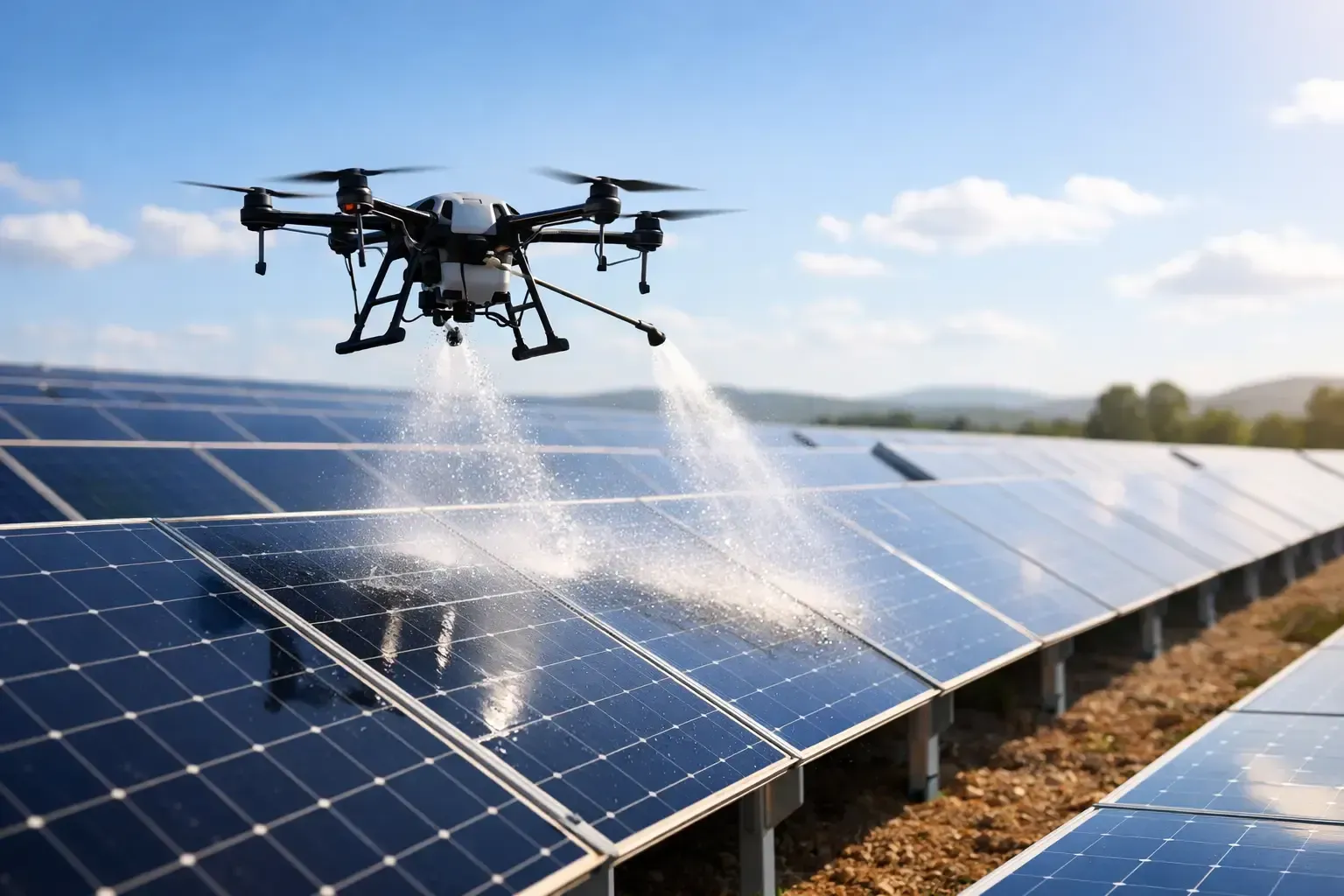
A dusty solar array does not fail all at once. It just starts producing a little less every day, and on a large site, that loss adds up fast. That is why drone solar panel cleaning is getting serious attention from property owners, solar operators, and facility managers who need a safer, faster way to maintain performance without putting crews directly on panels or sending heavy equipment across the site.
For utility-scale and commercial systems, cleaning is not just a maintenance chore. It is an operating decision tied to output, labor costs, water usage, safety exposure, and downtime. The right approach depends on the size of the array, the amount of soiling, site access, local weather, and how often the panels need service. In dry, dusty markets like the Southwest, those variables matter even more.
Why drone solar panel cleaning is gaining traction
Traditional cleaning methods still have a place, but they come with limits. Ground crews can be slow on large arrays. Manual cleaning also puts workers in close contact with energized equipment, slippery surfaces, and repetitive strain. Vehicle-based systems can cover ground efficiently, but not every site has the spacing, terrain, or layout to support them.
Drone solar panel cleaning changes that equation by bringing cleaning equipment to the panel surface from above. A properly equipped drone can apply water or cleaning solution with controlled pressure while the operator maintains standoff distance and clear visibility. On the right site, that means less foot traffic on the array, fewer access issues, and faster coverage across long rows.
This is not a gimmick service for marketing videos. It is a practical tool for specific cleaning scenarios where speed, reach, and reduced physical contact with the array have real value. For owners managing large properties, hard-to-access installations, or sites where labor efficiency matters, drones can solve a very expensive maintenance problem.
Where this method works best
The strongest use case is large-scale solar infrastructure. Commercial rooftops, solar farms, carport arrays, and industrial sites with extensive panel coverage can all benefit when layout and operating conditions support drone deployment. The more difficult it is to move people and equipment through the site, the more compelling the drone option becomes.
Dust-heavy environments are another good fit. In Arizona and South Texas, airborne dirt, pollen, and construction dust can settle quickly, especially during dry stretches with limited rain. A light but widespread layer of soiling may not look dramatic from the ground, but it can still reduce performance enough to justify scheduled cleaning.
Steep or elevated installations also deserve a close look. Some rooftop systems are technically reachable, but access may require fall protection planning, lift equipment, or temporary work restrictions around the building. A drone-based approach can reduce the operational disruption, though it still requires careful flight planning and safe site management.
What good cleaning actually requires
The phrase "drone cleaning" can make the work sound automatic. It is not. Effective solar panel cleaning depends on the same fundamentals as any other maintenance service - the right equipment, trained operators, proper water use, and a method that protects the panels rather than just rinsing them.
First, pressure matters. Too little pressure may leave residue behind. Too much can be inappropriate for the panel surface, seals, frames, or surrounding components. The operator has to understand how to maintain consistent distance, angle, and spray pattern while accounting for wind, temperature, and battery time.
Second, water quality matters. In many cases, deionized or purified water is preferred because it reduces spotting and mineral deposits. If the site has hard water and the cleaning process leaves residue, the result may not justify the labor. In desert climates, this detail is often overlooked until streaking becomes visible.
Third, timing matters. Cleaning in the wrong part of the day can create avoidable issues. Panels that are hot from full sun may not be ideal candidates for immediate washing, depending on conditions and the equipment being used. Operations should be planned with site temperature, sunlight, wind, and production schedules in mind.
The trade-offs property owners should understand
Drone solar panel cleaning is not automatically the best option for every system. Smaller residential arrays may be serviced more economically with conventional methods, especially when access is simple and the panel count is low. If the setup is easy to reach safely with minimal labor, the cost advantage of a drone may be less dramatic.
Heavy buildup can also change the equation. If panels have caked-on mud, bird droppings, or residue that needs agitation rather than a controlled rinse, some sites may require a hybrid method or follow-up hand work. Drones are strong tools, but they are still tools. The right decision depends on the type of contamination, not just the size of the array.
There is also the question of airspace and operating environment. Not every property is simple to fly. Controlled airspace, nearby structures, power lines, active facilities, and changing weather all affect how the job should be planned. That is why experience matters. FAA-certified operations, proper insurance, and a documented workflow are not extras. They are part of what makes the service dependable.
Safety is one of the biggest advantages
For many commercial clients, safety is the real driver behind the shift. Reducing worker exposure on rooftops or across sprawling solar fields is a direct operational benefit. Less climbing, less walking across active arrays, and less use of ladders or lifts can reduce both risk and disruption.
That does not mean drone cleaning is risk-free. It means the risk profile changes and becomes more controllable when the work is handled by trained operators using a site-specific flight plan. Pre-flight checks, battery management, airspace review, weather evaluation, and jobsite coordination all matter.
For owners and managers, this is where vendor selection becomes critical. A low-cost operator with a consumer mindset can create more risk than value. A professional drone services company should be able to explain how the mission will be flown, how the site will be protected, what insurance is in place, and how compliance will be handled if the property sits in or near controlled airspace.
Performance, scheduling, and maintenance planning
Cleaning only works as a business decision when it is tied to measurable outcomes. On some sites, that means restoring production after visible soiling. On others, it means building a preventive maintenance schedule based on season, weather, and known site conditions.
There is no universal interval. A site near active construction may need more frequent service than an isolated array with limited dust exposure. A property manager overseeing multiple commercial assets may prefer a recurring schedule to simplify budgeting and prevent gradual losses from being ignored. It depends on operating goals and how sensitive the site is to output decline.
This is also where combining services can add value. In some cases, cleaning should be paired with aerial inspection, thermal review, or visual documentation so operators can spot damaged modules, hotspots, drainage issues, or problem areas while the maintenance work is being performed. That kind of operational efficiency matters more than a simple wash-and-go approach.
Choosing a provider for drone solar panel cleaning
If you are evaluating providers, start with the basics. Ask whether the pilots are FAA-certified, whether the company is insured for commercial operations, and whether they have experience flying in complex environments. Then go deeper. Ask how they handle water delivery, what cleaning method they use, what panel conditions may require a different approach, and how they document the work.
It is also worth asking about responsiveness and scheduling. Solar maintenance often competes with weather windows, tenant activity, facility operations, and production needs. A provider that communicates clearly and shows up prepared is not a small detail. It is part of the service value.
For clients in the Southwest, local operating knowledge matters too. A crew that understands desert dust, heat, wind patterns, and regional airspace constraints will generally plan better and work more efficiently. Phoenix Drone Pros approaches specialty drone work the same way it handles inspections and commercial flight operations - with compliance, preparation, and practical field execution at the center.
Drone cleaning is not about replacing every traditional method. It is about using the right tool when the job calls for speed, access, and reduced labor exposure. If your solar asset is large enough that dirt is now an operating cost rather than a minor inconvenience, it may be time to treat cleaning like performance maintenance instead of basic housekeeping.