Phoenix Drone Pros
Blog
Drone wedding videography adds scale, motion, and setting to your film, but it takes FAA-compliant planning, timing, and safe execution.
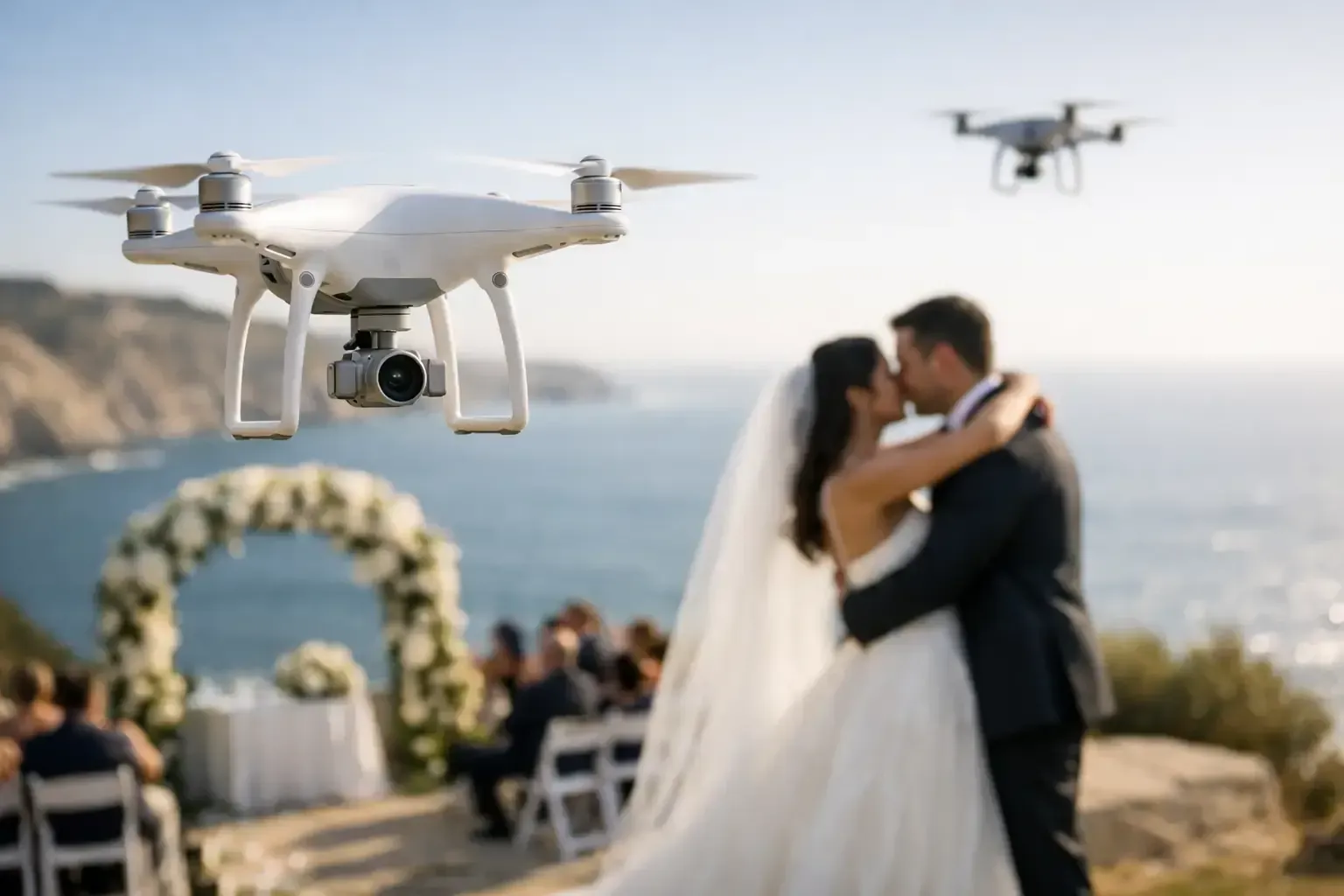
A packed dance floor looks great at eye level. A ceremony framed by desert mountains, a resort lawn, or a city skyline looks different from 200 feet up. That is where drone wedding videography earns its place - not as a gimmick, but as a way to show the setting, movement, and scale that ground cameras simply cannot capture.
For couples, planners, and venues, the value is straightforward. Aerial footage can establish the location, follow the wedding party across a property, and add cinematic transitions that make the final film feel complete. But the best results come from disciplined flight planning, safe operations, and knowing when a drone helps the story and when it does not.
What drone wedding videography adds to a wedding film
A wedding day moves fast. There are only a few moments when the full setting, guest flow, and venue layout can be captured cleanly. A drone is especially useful for those wide establishing shots that place the ceremony in context, whether that is a golf course in Phoenix, a private estate, a resort courtyard, or a rural venue with open land.
It also adds motion that feels intentional. A slow reveal over the ceremony space, a rising shot as the couple exits, or a tracking pass that shows the wedding party walking the property can give the final edit variety without feeling forced. Good drone wedding videography supports the main film. It should not distract from vows, family moments, or reception coverage happening on the ground.
That distinction matters. Some weddings benefit from several aerial sequences. Others only need a few carefully timed shots. If the venue is compact, heavily shaded, or close to airspace restrictions, the right approach may be limited drone coverage paired with strong ground cinematography.
Why planning matters more than the aircraft
Most clients ask about video quality first, and that is fair. Camera resolution, stabilization, and color performance all affect the final product. Still, the operational side usually determines whether aerial coverage happens smoothly.
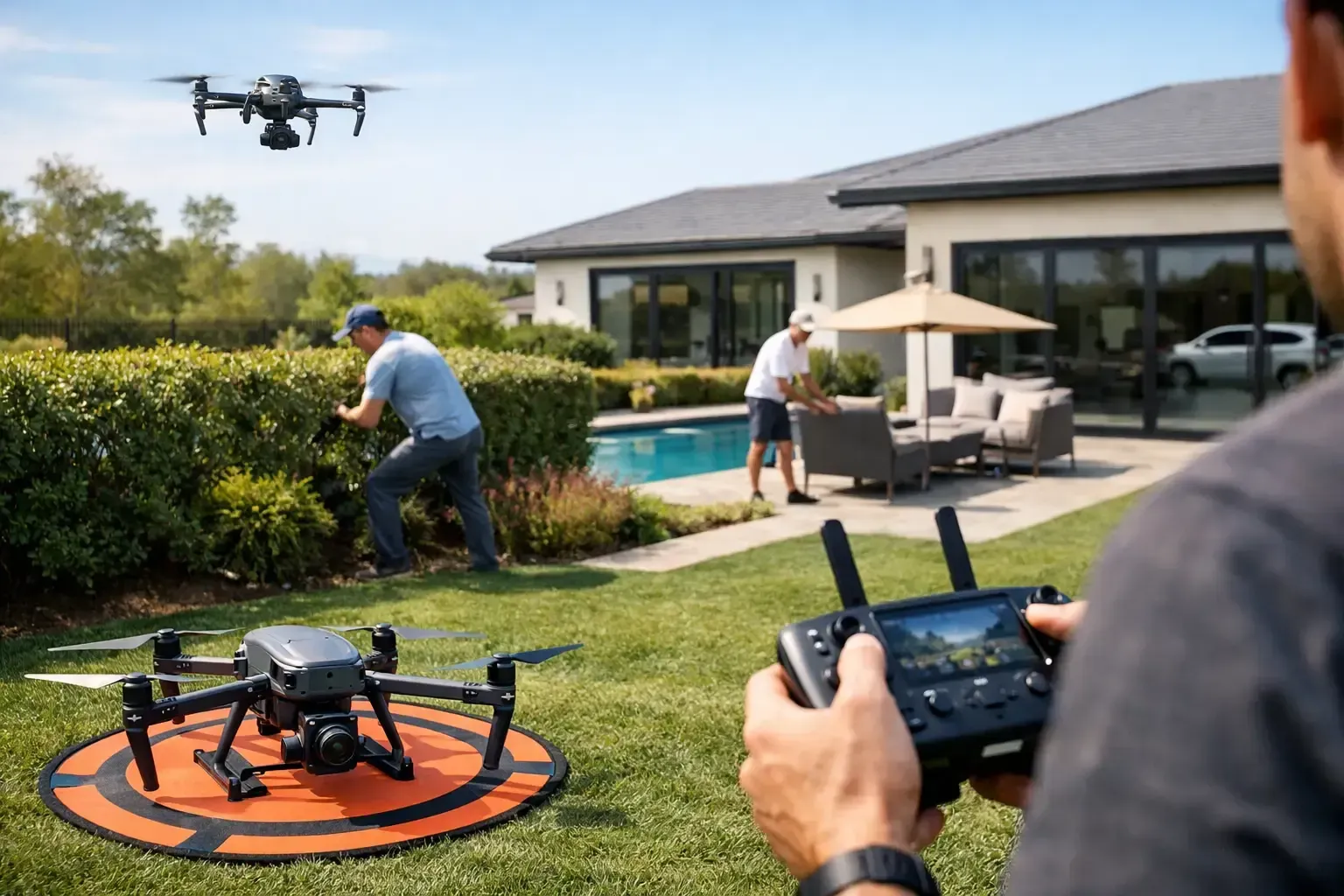
Wedding flights are often time-sensitive, location-sensitive, and people-dense. Unlike a vacant property shoot, a wedding involves guests moving unpredictably, changing timelines, and multiple vendors working at once. That means the drone operator needs to coordinate flight windows, maintain safe stand-off distances, and understand where takeoff and landing can happen without interfering with the event.
This is also where FAA compliance becomes more than a line item. Not every venue is in unrestricted airspace. Some are near airports, heliports, or controlled zones that require airspace review or authorization. Some local venues may have property-specific policies about launches, noise, or guest proximity. An insured, FAA-certified operator with experience in controlled airspace and live-event environments can evaluate those issues before the wedding day instead of improvising on site.
Drone wedding videography is not one-size-fits-all
Aerial wedding coverage works best when it fits the venue and the timeline. Outdoor ceremonies with strong natural backdrops are usually the clearest fit. Open desert venues, ranch properties, mountain overlooks, vineyard-style layouts, and large resort grounds all benefit from elevated perspective.
Tighter urban venues can still work, but expectations should be adjusted. In a dense downtown setting, the drone may be ideal for skyline reveals or exterior venue shots before guests arrive, while close-in coverage during the event itself may be limited by space, safety, or airspace rules.
Weather is another factor that clients tend to underestimate. High winds, dust, heat shimmer, and rapidly changing light can affect both flight safety and image quality. In the Southwest, that matters. A professional operator plans around those conditions and builds flexibility into the shot list rather than promising footage that may not be safe to capture.
The best times to fly on a wedding day
Not every part of the day is equally suited to aerial filming. In most cases, the strongest drone footage comes before guests are seated, during selected transitions, and after the ceremony when the couple can step away briefly for dedicated shots.
Pre-ceremony flights are often the cleanest opportunity to capture the venue, ceremony setup, floral layout, and surrounding landscape without crowd movement. That footage helps establish the day from the start.
Ceremony coverage depends on the setting and the operator's ability to work discreetly. Some couples want a high, wide view of the processional or the full ceremony space. Others prefer no aircraft in the air during vows. There is no universal rule. It depends on guest count, venue layout, wind, sound sensitivity, and the couple's priorities.
Reception coverage can be effective in small doses, especially for grand entrances, outdoor dining setups, or wide twilight views of the property. But drones are rarely the star once the party is underway. Ground cameras usually carry the emotional weight better in those moments.
Safety and professionalism are part of the product
Wedding clients are not just buying footage. They are hiring judgment.
A professional drone team should be able to explain where the drone will launch, when it will fly, how flight areas will be managed, and what happens if conditions change. They should also carry proper insurance and understand that a wedding is a live event, not a practice session.
This is one reason experienced commercial drone operators often bring a stronger process to weddings than part-time hobbyists. Live environments demand discipline. There may be coordinators managing a tight timeline, venues with restrictions, photographers protecting key angles, and guests who naturally move toward the aircraft out of curiosity. A dependable operator works within that environment without creating friction.
For venues and planners, that professionalism matters just as much as the final edit. A poorly managed drone flight can disrupt the event. A well-managed one is barely noticed until the finished video arrives.
How to evaluate a drone wedding videography provider
The portfolio should show more than dramatic landscapes. Look for actual wedding coverage with clean composition, smooth movement, and shots that feel purposeful. Anyone can post a flashy reel. The better question is whether the operator can consistently capture venue context, couple portraits, and live-event moments without overusing the drone.
Ask practical questions. Are they FAA certified? Are they insured? Have they flown in controlled airspace? Do they coordinate with the planner or venue in advance? Do they have a weather backup plan? Can they explain what aerial coverage is realistic for your location?
The answers will tell you more than a highlight reel. Strong providers are specific. They do not promise unlimited flight time or cinematic coverage in conditions that clearly do not support it. They explain trade-offs and build a plan around the site, schedule, and safety requirements.
What couples and venues should expect from the final footage
Drone footage is usually most effective as part of a larger wedding film, not as a standalone deliverable. Its job is to add scale, pacing, and visual context. A few well-placed aerial shots can elevate the entire edit, especially when they are used to open scenes, bridge transitions, or close the film with a wider sense of place.
That means more drone footage is not always better. Ten strong aerial clips will usually outperform fifty repetitive flyovers. Quality comes from timing, composition, and editorial restraint.
For venues, professional aerial coverage has value beyond the couple's film. With proper permissions, drone visuals can also support future marketing by showing the property layout, ceremony options, guest capacity, and surrounding scenery in a way still photography alone cannot. That makes wedding drone work appealing not only for one event, but for long-term venue presentation.
A local advantage matters more than many realize
Wedding locations in the Southwest can present unique flight considerations, from heat and afternoon wind to resort operations and nearby airspace constraints. A local operator who already understands those conditions can often plan more effectively than someone traveling in for the event.
That is especially true in markets like Phoenix, where scenic venues may sit under complex airspace or close to active flight paths. Companies such as Phoenix Drone Pros bring the kind of FAA-certified, insured, operational experience that helps events stay on schedule while still capturing high-value aerial footage.
Drone wedding videography works best when it is approached like any other professional field operation - with planning, communication, and respect for the environment. When those pieces are in place, the result is not just a beautiful overhead shot. It is a wedding film that actually shows where the day happened and why that setting mattered.