Phoenix Drone Pros
Blog
Learn how to market luxury homes aerially with drone photo and video strategies that highlight scale, setting, amenities, and premium buyer appeal.
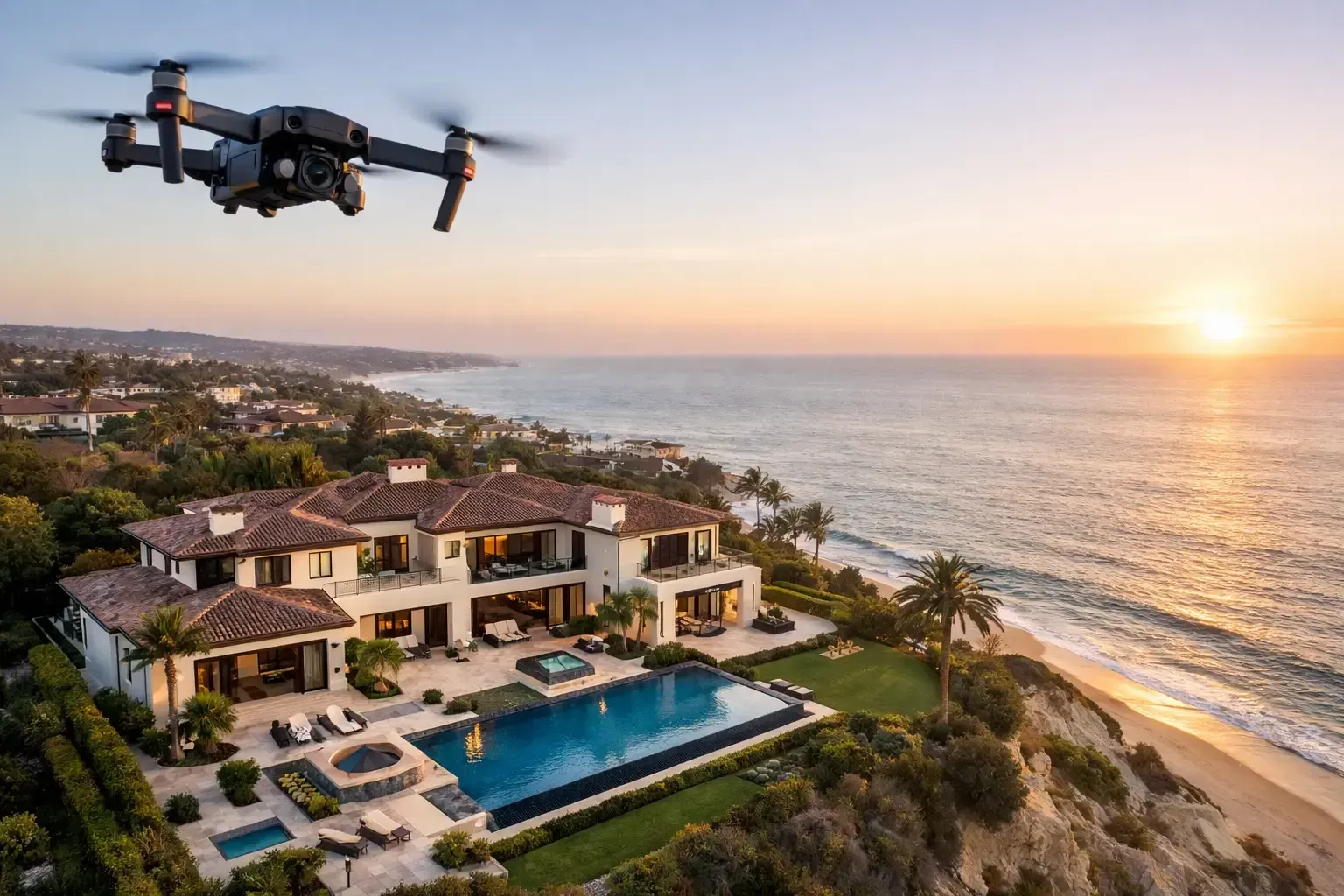
A luxury listing rarely loses attention because of square footage alone. It loses attention when the marketing fails to show why the property feels exceptional in person. That is exactly where knowing how to market luxury homes aerially changes the outcome. Aerial media gives buyers context, scale, privacy, and lifestyle cues that ground-level photography often misses.
For high-end homes, buyers are not just comparing kitchens and primary suites. They are evaluating approach, lot position, views, separation from neighbors, outdoor living space, and the overall experience of arrival. If those details are weak or absent in the listing package, the property can look flatter and more ordinary than it really is.
Why aerial marketing works for luxury properties
Luxury real estate is about more than interiors. A buyer wants to understand the relationship between the home and everything around it. Aerial imagery makes that easy. It can show a long private drive, a gated entry, mountain views, golf frontage, resort-style pools, detached guest houses, tennis courts, and the way the home sits on the lot.
That broader perspective matters even more in markets where land, privacy, and location carry major value. In Phoenix and other Southwest markets, a drone can reveal desert preserve adjacency, custom landscaping, backyard entertaining areas, and the property's orientation to sunsets or city-light views. Those are not minor details. They are often part of the premium a buyer is being asked to pay.
Aerial media also helps qualify buyers faster. When a listing clearly shows the home's setting and layout, prospects can decide earlier whether it matches what they want. That can reduce wasted showings and improve the quality of inquiries.
How to market luxury homes aerially with the right story
The mistake many agents make is treating drone work as a visual add-on instead of a sales tool. Good aerial marketing is not just a few overhead shots at sunset. It should tell a deliberate story about exclusivity, access, land use, and lifestyle.
Start with the property's strongest selling angle. For one home, that may be privacy and acreage. For another, it may be proximity to a golf course, waterfront access, or a dramatic hillside setting. The aerial plan should be built around that angle, not around generic flight patterns.
If the home's value comes from scale, wider elevated shots can show the full footprint of the residence, guest structures, motor court, and outdoor amenities in one frame. If the value comes from location, the footage should establish the home's relationship to the surrounding environment without feeling like a map. If the value comes from entertainment appeal, the sequence should move naturally from arrival to pool, patio, outdoor kitchen, and view corridor.
This is where experienced operators stand apart from hobbyist pilots. Capturing luxury property well requires more than flying safely. It requires understanding what buyers respond to and what real estate professionals need in a final media package.
The aerial shots that matter most
Not every drone shot earns its place. In luxury marketing, each image or clip should answer a buyer question.
High oblique front angles are often the best starting point because they show the home's facade, frontage, landscaping, and approach in one composition. Straight overhead images can be useful for lot orientation, but they rarely carry the emotional impact needed for a luxury campaign on their own.
Rear elevation shots are equally important, especially when the backyard is a major value driver. Pools, covered patios, fire features, detached casitas, and view fencing read much better from the air than from the ground. When the home backs to open space, golf fairways, or water, that context should be obvious within the first few seconds of the video.
Low-altitude cinematic movement can also help, if it stays controlled and purposeful. A gentle approach over a drive or across a pool deck can create a sense of arrival. But too much motion, or overly dramatic flying, can make the property feel like a drone demo rather than a premium listing.
When aerial video outperforms aerial photos
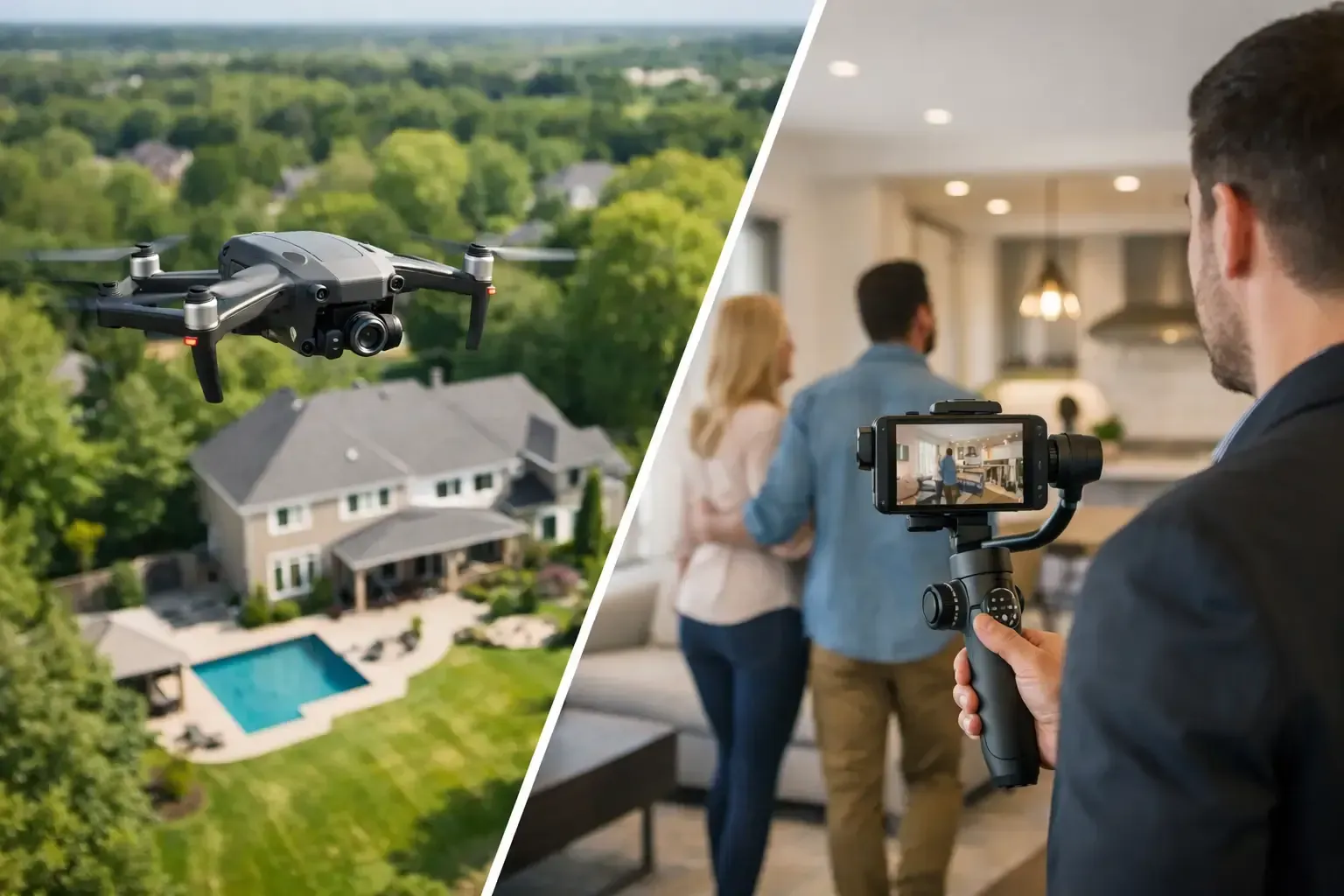
Photos are still essential because they work across MLS, brochures, social content, and email marketing. But for upper-tier listings, video often does the heavier lifting. It gives buyers a feel for flow, distance, and atmosphere in a way still images cannot.
That said, it depends on the property. A luxury home with major land, strong views, and layered outdoor amenities usually benefits from a polished aerial video. A high-end home in a tighter infill neighborhood may get more value from a smaller set of strategically captured aerial stills that clarify orientation and lot advantage.
The best campaigns usually use both. Photos provide fast scanning value. Video creates emotional engagement and more time spent with the listing. Together, they support stronger presentation across listing pages, social media, paid advertising, and direct outreach to buyer networks.
Timing, lighting, and weather affect the result
Luxury buyers notice quality immediately. Harsh midday light, flat skies, and windy footage can make an expensive home look ordinary. Timing matters.
Early morning and late afternoon usually produce the most flattering light for exterior aerial work. In desert environments, this is especially important because overhead sun can wash out textures and create hard shadows across the facade and landscaping. Golden-hour conditions often bring out depth, warmth, and contrast that better match the price point of the property.
Season and weather can also influence what should be captured. Some homes show best when the pool is active, outdoor fireplaces are lit, and lounge areas are staged. Others benefit from clearer winter visibility if mountain ranges or long-distance views are part of the story. Good planning beats rushed scheduling every time.
Compliance is part of the marketing quality
Luxury agents and homeowners sometimes focus only on the finished visuals. That is understandable, but it overlooks a practical issue: if the flight is not legal and properly managed, the project carries unnecessary risk.
Professional aerial marketing should be handled by an FAA-certified, insured drone operator who understands local restrictions, controlled airspace, and property-specific safety considerations. This matters even more for luxury homes located near airports, in dense neighborhoods, or in communities with sensitive privacy concerns.
A properly managed operation protects the listing, the client, and the agent's reputation. It also reduces the chance of delays caused by avoidable airspace or access issues. For higher-end properties, professionalism behind the scenes is part of the product.
How to coordinate aerial media with the full listing package
Drone content works best when it is integrated, not isolated. The aerial shoot should complement ground photography, interior video, twilight imagery, and listing copy.
That means the media team needs to know what the campaign is emphasizing before the flight begins. If the listing will be positioned around outdoor entertaining, the drone plan should support those features visually. If the listing narrative centers on privacy and estate scale, the aerial set should make that point immediately.
Consistency matters too. Color profile, pacing, shot selection, and editing style should all feel aligned with the home's market position. A premium property deserves premium visual discipline. If the drone footage feels generic while the rest of the package feels polished, buyers notice the disconnect.
Common mistakes in luxury aerial marketing
The most common error is overusing altitude. Flying too high can make a property feel smaller and less personal. It can show location, but it often loses the emotional connection buyers need. Another mistake is using too many shots with no clear purpose. More footage does not automatically create more value.
There is also the issue of poor staging. Aerial imagery reveals everything - empty lounge areas, uncovered equipment, stained hardscape, vehicles in the driveway, or patchy landscaping. Before the drone arrives, the property should be prepared specifically for aerial visibility, not just curb appeal from the street.
Finally, some campaigns rely on drone media to compensate for weak strategy. Aerials can elevate a strong listing presentation, but they cannot fix bad pricing, thin copy, or inconsistent branding.
What high-end buyers actually respond to
Luxury buyers tend to respond to clarity, confidence, and a strong sense of place. They want to see that the home offers something difficult to replicate. Aerial marketing supports that by making the property's unique advantages visible at a glance.
For some buyers, that means seeing privacy lines and lot depth. For others, it means understanding outdoor living, nearby amenities, or the way the architecture sits within the landscape. The point is not to show everything from the air. The point is to show the right things, in the right order, with enough polish to match the level of the listing.
When executed well, aerial marketing helps a luxury home feel more legible, more desirable, and more worth the asking price. That is why experienced real estate teams continue to invest in it, especially on listings where setting and presentation carry as much value as the structure itself.
If you want the market to see a luxury property the way it deserves to be seen, start by showing the full picture - safely, strategically, and with a flight plan built around what sells.